Inherited a Georgia Rental With Existing Tenants: What to Do
What happens to a tenant's lease when they inherit the rental property in Georgia? The lease runs with the land. When you inherit a property with an active tenant, you step into the prior landlord's legal position — obligations, security deposit liability, and all — for the remainder of the lease term. You cannot terminate the lease because ownership changed. Georgia's Safe at Home Act applies immediately. So does HB 399 if you live outside the state.
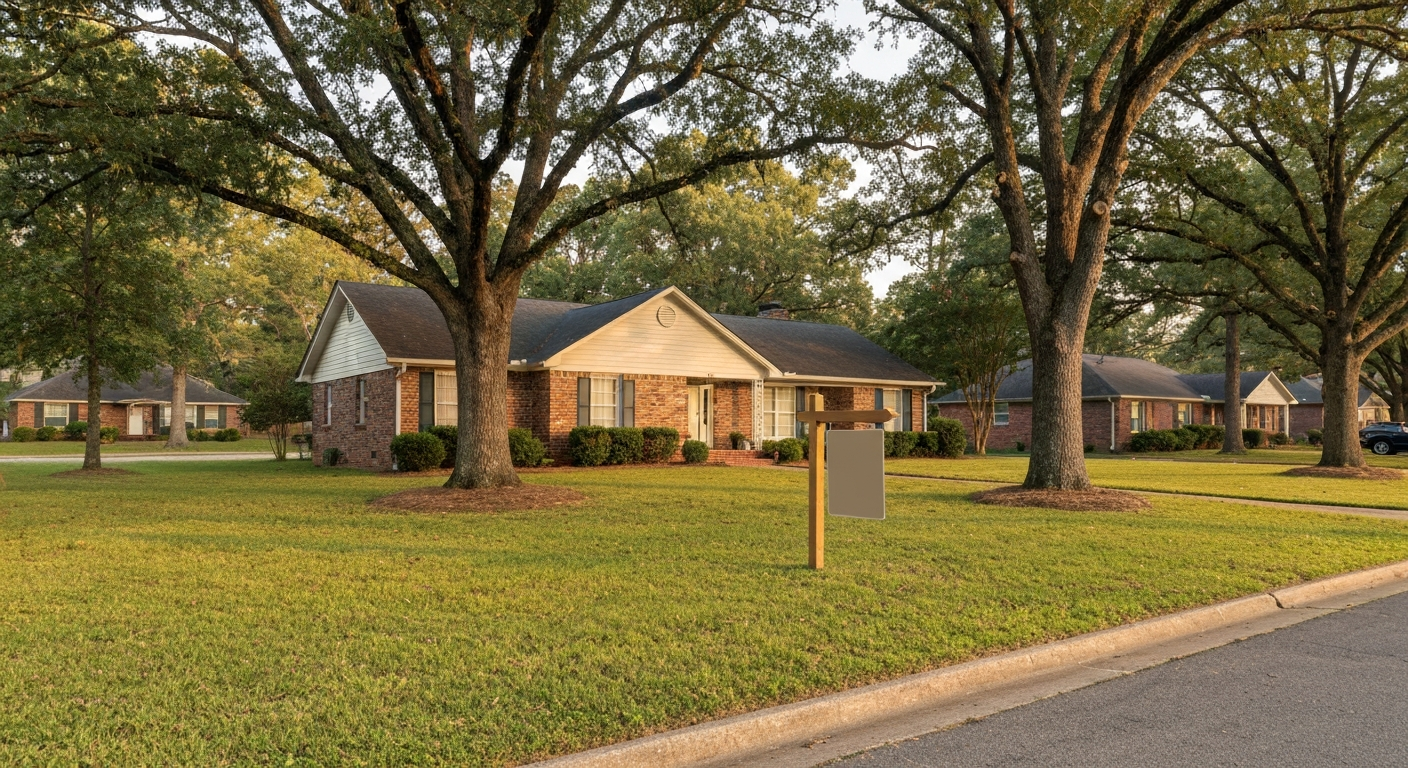
The call comes from an estate attorney you've never met. Your father passed away and left you a three-bedroom brick ranch in Martinez. The good news: the mortgage is paid off. The complication you didn't expect: someone is living there. Their lease runs through the end of September.
Most guides about inheriting property assume you're inheriting something empty — a house you can paint, price, and list. The reality for a meaningful number of CSRA heirs is different. The property comes occupied. The tenant has rights. And you, whether you planned it or not, are now their landlord.
That status carries legal obligations that begin the moment title transfers, not the moment you feel ready for them. This guide covers what those obligations are, what you must do in the first 30 days, and how to make a clear-eyed decision about the tenant relationship once the lease term ends.
The Core Rule: A Lease Runs With the Land
Georgia's property law — codified in O.C.G.A. Title 44, Chapter 7 — treats a lease as a property right that transfers with the underlying land. When ownership of a rental property changes hands, the new owner steps into the position the prior landlord held. The tenant's rights under the original lease do not change.
This means you cannot:
- Cancel the lease because ownership transferred
- Change the rent mid-term because you now own the property
- Demand the tenant vacate before the lease expiration
- Modify any lease term — notice requirements, pet policy, guest policy — without the tenant's written agreement
What you did not negotiate and did not sign, you are still bound by. Every clause the prior landlord agreed to is now your obligation until the lease expires or is properly renewed.
The practical consequence for a CSRA heir: if you inherit a property in Evans or Grovetown with eight months remaining on a 12-month lease at $1,700 per month, you are collecting $1,700 per month for eight months — regardless of what comparable homes currently rent for in the neighborhood, and regardless of whether that number makes financial sense to you. The time to revisit the rent is at renewal.
This is not a punishment. It is the same protection that makes tenants feel secure enough to sign leases in the first place. Understanding it from the start will keep you out of a situation that ends in a dispossessory hearing.

Your First 30 Days as an Inherited Landlord
There is a specific set of things that need to happen before anything else. The order matters.
Get the Lease and Supporting Documents
Before you contact the tenant, ask the estate attorney or executor to locate: the full lease agreement and any addenda (pet addendum, parking addendum, move-in inspection report), the security deposit amount and where those funds are currently held, records of any repairs or maintenance requests made during the tenancy, and records of whether rent has been paid on time.
You are about to take legal responsibility for a landlord-tenant relationship. You need to understand what that relationship has been.
Notify the Tenant in Writing
Once you have the documents, write a brief letter to the tenant identifying yourself as the new owner of the property. Include your mailing address. If you are designating a property management firm — which we'll address in a moment — include that firm's name, address, and phone number.
Georgia law requires that a landlord be identifiable at all times so that the tenant has a valid address to which they can send notices, rent payments, and legal papers. This is not optional. If you disappear after inheriting the property and the tenant needs to serve you a notice, the legal process cannot run on a valid timeline.
The Security Deposit Transfer
Under O.C.G.A. §44-7-33, when a landlord transfers their interest in a property, they must deliver to the tenant a written statement identifying the new landlord, the security deposit amount, and either written evidence of the transfer of deposit funds to you, or a return of the deposit to the tenant directly.
In practical terms: the estate must send you the deposit funds and provide the tenant documentation that this happened. If the estate fails to do this — which does happen in complex probate situations — you are still responsible for returning the deposit properly at move-out. You may need to pursue the estate for reimbursement of the funds, but you cannot offset that recovery against what you owe the tenant.
Get written confirmation from the estate attorney of the deposit amount, its location, and the transfer timeline. Then confirm receipt and notify the tenant in writing of the new deposit holder. Our security deposit guide covers Georgia's return requirements in detail — read it before you need to apply it.
What You Can and Can't Modify in the Existing Lease
The short version: during an active fixed-term lease, almost nothing. At renewal, almost everything.
During the active term:
- Rent amount: cannot be changed
- Lease end date: cannot be shortened
- Pet policy, guest policy, parking rules: cannot be changed unilaterally
- Maintenance responsibilities: governed by the existing lease and Georgia law
What you CAN do during the active term:
- Inspect the property with 24-hour written notice (O.C.G.A. §44-7-6 — this right is the landlord's regardless of who holds title)
- Enforce the existing lease terms for violations (late rent, unauthorized occupants, damage)
- Designate a new property management contact — you are not modifying the lease by replacing the management company, only updating who the tenant contacts
For month-to-month tenants:
If the existing tenant is on a month-to-month arrangement rather than a fixed term, you have somewhat more flexibility. You can raise the rent with proper written notice — Georgia's current rule requires 60 days' notice for increases. You can also non-renew the month-to-month with 60 days' written notice.
Even month-to-month, however, you cannot raise rent mid-period or retaliate against a tenant for exercising their legal rights. Retaliation — raising rent or threatening eviction within 90 days of a tenant filing a complaint or requesting legally required repairs — is prohibited under Georgia law.
Can You Ask the Existing Tenant to Leave?
The question every new inherited landlord asks. The honest answer: it depends on what type of lease exists and when it ends.
Fixed-term lease: You cannot force a tenant to vacate before the lease expiration date unless they materially breach the lease (non-payment, unauthorized subletting, criminal activity on the premises). Georgia's dispossessory process exists for cause-based evictions, but ownership change is not a cause. The lease runs to its expiration.
Month-to-month tenancy: You can issue a non-renewal notice with 60 days' written notice. The tenant has the right to remain through the end of the notice period. You are not required to give a reason for non-renewal in Georgia — the state has no statewide just-cause eviction requirement for residential tenancies.
Owner-occupancy: If you intend to move into the property as your primary residence, that intention does not override an active fixed-term lease in Georgia. You can note your future plans in writing, but you cannot demand early possession. Plan your move-in timeline around when the lease actually expires.
The cleaner and more respectful approach in most cases: honor the lease term, assess the tenant relationship carefully, and make a renewal decision with clear eyes before the lease expiration. A good long-term tenant who has been paying on time is a financial asset in the CSRA's current rental market — the average days-to-lease for a well-priced three-bedroom in Evans or Grovetown runs 14 to 30 days even in favorable conditions. Unnecessary turnover costs time and money.

Property Condition and the Safe at Home Act — You Can't Pass the Buck
One of the most important and least understood points for inherited landlords: Georgia's Safe at Home Act (HB 404) does not care who owned the property before you. The moment you hold title, you are responsible for the property's habitability.
The Safe at Home Act, effective July 1, 2024, requires Georgia landlords to maintain rental properties that are:
- Fit for human habitation (structural integrity, weatherproofing, working roof and exterior walls)
- Supplied with functioning heating and cooling systems
- Equipped with working plumbing, hot water, and electrical systems
- Free from rodent infestation, mold causing health hazards, and conditions dangerous to life or safety
- Provided with working smoke detectors in each bedroom and on each floor
If the prior owner deferred maintenance, you inherit that deferred maintenance. If the HVAC has not been serviced in years, that is your problem now. If there are code violations from a prior permit issue, you will be the landlord named in any enforcement action.
Schedule a formal property walkthrough within your first 30 days. Provide the tenant 24-hour written notice as required by O.C.G.A. §44-7-6. Bring a checklist that covers every habitability item. The Annual Property Inspection form McBride PM uses covers all Safe at Home Act items in a systematic format — use it as your guide.
Repair anything that fails before your next lease term begins. If you need to do repairs during the active lease, you can access the property with proper notice. If repairs require the tenant to temporarily relocate and you agreed to cover that cost, get it in writing. If the property is in serious disrepair, consult a Georgia real estate attorney before taking any action, because the tenant may have rights to withhold rent under Georgia's repair-and-deduct provisions as interpreted through HB 404.
This is general guidance from a property manager — not legal advice; talk to a Georgia-licensed real estate attorney for your specific situation.
Out-of-State Heirs and the HB 399 Requirement
Many inherited properties in the CSRA end up owned by heirs who live in Atlanta, Charlotte, DC, or another state. If that describes your situation, you have an additional legal requirement that goes into effect immediately.
Georgia HB 399 (O.C.G.A. §44-7-25) requires any out-of-state landlord renting residential property in Georgia to designate a Georgia-licensed real estate broker or licensed property management firm as their in-state representative. This person is:
- The legal point of contact for all tenant notices
- The address to which court summons and dispossessory papers are served
- The party responsible for making the property accessible for legally required inspections
Self-managing from another state is not a compliant option. If your tenant needs to serve you a formal notice and you have no valid in-state address on file, that notice has nowhere to go — and a court may rule that the tenant's obligations are suspended as a result.
At McBride Property Management, we handle this designation regularly for out-of-state heirs who inherit CSRA properties. Amber McBride manages our onboarding process and can have a formal management agreement and tenant notification in place within days of you making contact. The CSRA Landlord Field Guide also covers the HB 399 requirement and its practical implications for non-resident owners.
Should You Keep the Existing Tenant or Start Fresh at Lease End?
Once the immediate compliance obligations are addressed, you face a real decision: when the current lease expires, do you renew with this tenant or return the property to the market?
Neither answer is automatically correct. Here is how to evaluate it:
Reasons to renew with the existing tenant:
- Consistent on-time payment history through the prior landlord
- Property in good condition — no deferred damage, no unauthorized alterations, clean and maintained
- Cooperative during the ownership transition (responded to notices, allowed the walkthrough)
- Current rent within 10–15% of current market rate for the neighborhood
A tenant who has been paying reliably and maintaining the property is economically valuable. In the CSRA's mid-2026 market, a three-bedroom single-family in Evans or Martinez typically rents for $1,800–$2,300 per month for a quality unit in good condition. Finding, screening, and placing a new tenant — with the make-ready costs, potential vacancy, and leasing time involved — can cost $2,000–$4,000 in direct and opportunity costs before a new tenant pays their first month.
If the existing tenant is solid, renewing at an adjusted market rate (with proper notice and their agreement) preserves a productive relationship while capturing any rent gap that accumulated during prior ownership.
Reasons to plan for non-renewal:
- Missed or late rent payments under the prior landlord
- Property condition significantly below expected — unauthorized modifications, deferred damage, or cleanliness issues that suggest poor care
- Tenant did not respond appropriately to the ownership transition notice
- Current rent so far below market that renewal at any acceptable increase creates friction
If you're non-renewing, provide written notice per the lease terms — typically 30 days for fixed-term leases and 60 days for month-to-month — well before the expiration date. Document the notice delivery. Return the property to the CSRA rental market through a full make-ready process and proper tenant screening.
Whatever you decide, make the decision before the lease expires — not the week of. A lease that expires without written notice from either party in Georgia can convert to a month-to-month tenancy, extending your timeline. McBride PM's lease renewal framework covers the renewal process and pricing considerations in detail.
The Bigger Picture: What to Do If You're Not Ready to Be a Landlord
There is no shame in reaching the end of this guide and deciding that being a landlord — even for a single CSRA property you didn't plan to acquire — is not something you want to take on. The lease obligation is real and you must honor it. But how you fulfill it is your choice.
The most practical option for heirs who don't want to manage day-to-day: hire a professional property manager now, before anything else. Not after the tenant calls you with a maintenance issue. Not after you get a notice about something you don't understand. Now, during the calm window before any of those things happen.
A professional manager assumes day-to-day tenant communication, maintenance coordination, rent collection, legal compliance, and the ongoing HB 399 representation requirement. You receive monthly owner reports and direct deposits. The decision about whether to keep or eventually sell the property remains yours.
If you eventually decide to sell — and if you've been collecting rent for at least part of the holding period — you'll need to understand the depreciation recapture and capital gains implications at that point. Every year you claim depreciation on the inherited property, IRS Publication 527 (Residential Rental Property) governs those deductions and the recapture rules that apply at sale. Our guide on what Georgia landlords owe when they sell a rental property covers the federal and Georgia state tax picture in full.
This is general guidance from a property manager — not legal or tax advice; consult a Georgia-licensed attorney and a CPA for your specific situation.
Inherited a CSRA rental and not sure where to start? McBride Property Management works with heirs throughout Augusta, Evans, Martinez, and Grovetown who inherit occupied rental properties and need a fast, compliant path forward. We handle the tenant notifications, the deposit transfer documentation, the Safe at Home Act walkthrough, and the HB 399 designation — so you're not making it up as you go.
Request a free rental analysis or call us at (706) 339-2874 to talk through your situation. You can also download the CSRA Landlord Field Guide for a fuller reference on Georgia landlord-tenant law, Safe at Home Act requirements, and what professional property management costs in the Augusta area.
Noah McBride, Broker McBride Property Management 706.339.2874 Guiding you home.
Ready to Talk Property Management?
McBride Property Management handles the details while you enjoy the returns.
Talk to our team about your property