Augusta Rental Market: Mid-2026 Update for CSRA Property Owners
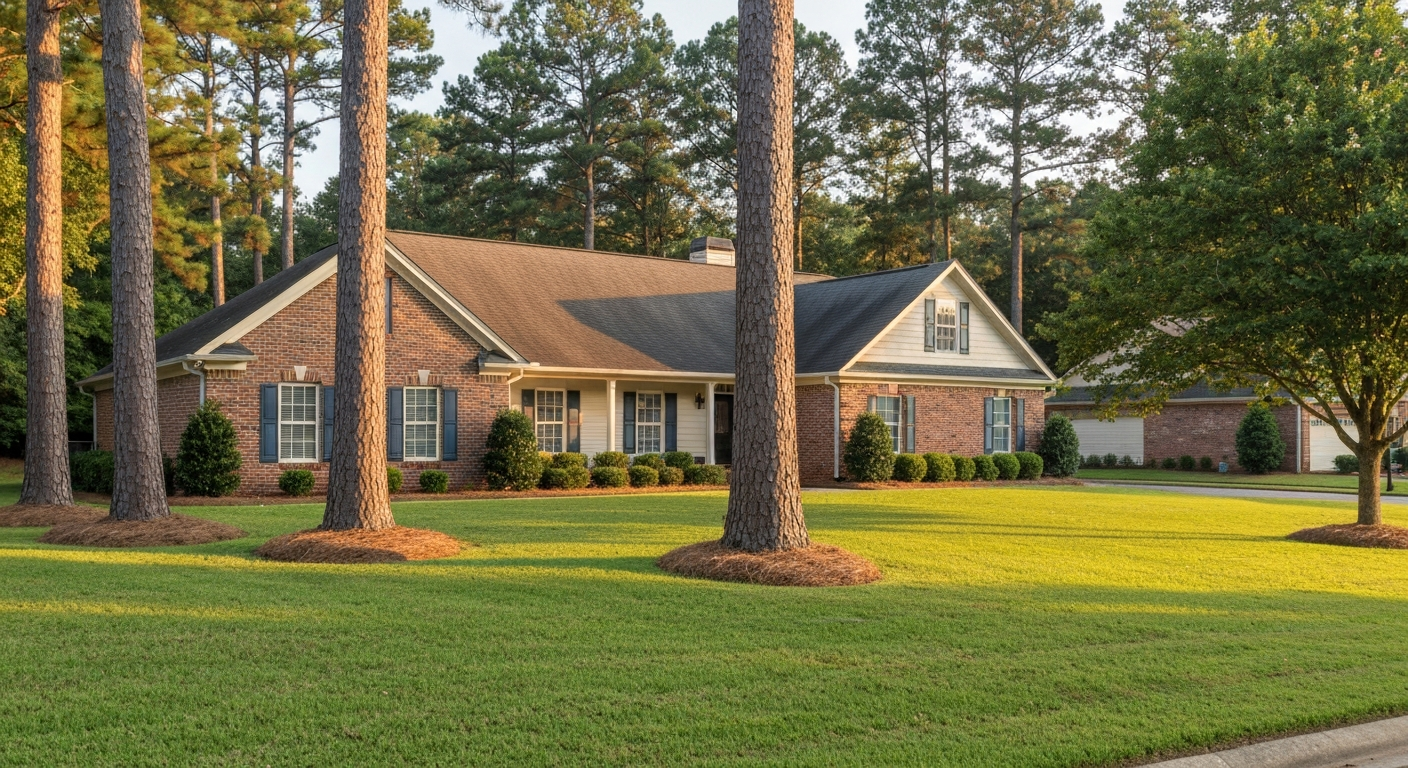
What does the Augusta, GA rental market look like at mid-2026? The CSRA rental market is stable and growing modestly. Augusta-area rents averaged $1,216–$1,230 per month in June 2026, up approximately 1.3% year-over-year, according to Apartment List. Fort Gordon's new Cyber School campus—officially transferred to the installation on May 29—signals that the demand underpinning CSRA rentals is expanding, not contracting.
Every June, a predictable set of forces lines up in the CSRA rental market: PCS orders arrive, summer leasing kicks into gear, and property owners either capitalize on the season or get caught flat-footed with a vacant home and a renewal that didn't close in time. This year there is a concrete, structural reason to be more confident than usual about the demand side of the equation—one that goes beyond the seasonal pattern.
On May 29, 2026, the U.S. Army Corps of Engineers formally transferred the new Military Construction Army 1 facility at Fort Gordon to the U.S. Army Cyber Center of Excellence. The handover marks the visible midpoint of a 35-project construction program that is physically reshaping Fort Gordon into the Army's premier cyber warfare training campus. That build-out runs through at least 2028, which means the installation's growth story is structural rather than cyclical—and for CSRA rental property owners, that distinction matters more than any quarterly rent figure.
Understanding what is actually driving demand—not just what rents are doing right now—is how you make good decisions about pricing, renewals, and whether the fundamentals support adding to your portfolio.
What the Current Data Says About CSRA Rents
Start with what's verifiable.
According to Apartment List's June 2026 Augusta rent report, the overall median rent across all bedroom types in the Augusta metro is approximately $1,216 per month, with some tracking services reporting closer to $1,230. Year-over-year growth sits at roughly 1.3%—modest by any standard, and dramatically different from the 8–12% annual surges Augusta saw during 2021–2022.
Rent by bedroom type, Augusta metro, June 2026:
| Bedroom Count | Median Rent | Approx. Square Footage |
|---|---|---|
| Studio | $1,017 | ~477 sq ft |
| 1 bedroom | $1,090 | ~708 sq ft |
| 2 bedroom | $1,259 | ~1,024 sq ft |
| 3 bedroom | $1,558 | ~1,308 sq ft |
Source: Apartment List, June 2026
Three things stand out in those numbers.
Augusta rents are approximately 40% below the national median. That figure matters not just as a feel-good data point for out-of-state buyers—it means the CSRA has significant runway before a price ceiling constrains demand. Renters priced out of Charlotte, Nashville, or Northern Virginia look at Augusta's rent table and see affordability that is still real and still improving their household budget.
The 3-bedroom tier at $1,558 is the segment most aligned with Fort Gordon BAH. Soldiers at the E-5 and E-6 pay grades—the installation's most common—are shopping for 3-bedroom homes in Evans, Grovetown, and Martinez at prices that land right inside their housing allowance. If you own a 3-bedroom home in the 30809 or 30813 ZIP codes and you're pricing it correctly, you're sitting in the center of summer demand. Our recent post on Fort Gordon BAH rates for 2026 breaks down the per-rank figures.
Year-over-year growth at 1.3% is good news for buy-and-hold owners. It means market appreciation is real but not inflated. Appraisers, lenders, and replacement-cost calculations are all moving in the right direction—without the lease-to-lease volatility that creates gap risk when a high-water rent expires and the market can no longer support the same number.
If you want to check where your specific property sits against current comps, McBride Property Management offers a free rental analysis—we'll tell you exactly what the market supports right now.
Fort Gordon: The Structural Demand Driver
The May 29 campus transfer deserves more than a headline mention. Here's what the construction actually means for the installation—and why that matters to rental property owners in Columbia County.
The U.S. Army's official announcement describes Fort Gordon as training approximately 20,000 signal and cyber soldiers every year. That is not a force-size statistic—it is a throughput figure. A major training institution generates a recurring pipeline of soldiers who need off-post housing while they complete their schooling, and that pipeline refills with every cohort regardless of what is happening in the broader economy.
The MCA 1 facility is the first deliverable from the 35-project CCoE MEGA Program, a multi-year initiative designed to physically transform Fort Gordon into a world-class cyber warfare education hub. The facility itself is still in a fit-out phase scheduled to complete in 2028. What that timeline tells landlords: Fort Gordon-related construction activity, contractor employment, and civilian support hiring are not a short-term event. They are a multi-year demand signal that extends well past the current lease cycle.
Concurrent with the Cyber School handover, Balfour Beatty Communities celebrated the first new homes at Pine Tree Terrace, part of a more than $50 million housing investment within Fort Gordon's privatized housing community, Providence Family Homes. At first glance, on-post housing expansion might seem like a competitive headwind for off-post landlords. It isn't. When the Army invests $50 million in on-post capacity, it signals that headcount is expected to grow—and the overflow, particularly for senior NCOs and officers who prefer to live off-post, lands directly in Evans, Grovetown, and Martinez.

Where Fort Gordon's Growth Lands in the CSRA Submarkets
The demand effect of Fort Gordon's expansion is not uniformly distributed. The signal is strongest in the ZIP codes with short commutes to the main gates and the Cyber Center buildings on the east side of post.
Grovetown (30813) is the primary beneficiary. Single-family homes built between 2005 and 2020 price cleanly in the $1,400–$1,700 range for 3-bedroom units—right inside BAH for the most common pay grades. Drive times to Gate 1 are consistently under 10 minutes, which matters to soldiers who may be on call or pulling early PT formations.
Evans (30809) draws PCS families with school-age children. The Columbia County School District footprint makes Evans the first choice when a family needs to sort out school enrollment alongside the housing search. Rents in Evans run $50–$150 higher than comparable Grovetown properties, and the market has absorbed those premiums without meaningful vacancy risk because the demand profile is different. If you have a property in Evans, see our Evans property management page for current market conditions.
Martinez (30907) is the value play in the Fort Gordon commute shed. Older housing stock prices $100–$150 below Evans for comparable square footage, and the proximity to Augusta University Medical Center makes Martinez a natural landing zone for medical residents and AU faculty as well as military families. Rental income per dollar of purchase price tends to be highest here.
McBride Property Management manages properties across all three of these zones and sees the demand patterns play out directly. For a full submarket-by-submarket breakdown with current numbers, the CSRA Landlord Field Guide has 12 pages of benchmarks.
SRS and the South Side of the Demand Picture
Fort Gordon dominates the Columbia County rental conversation, but the Savannah River Site—across the river in Aiken County—quietly anchors demand on the South Carolina side, and for investors eyeing North Augusta or Aiken, that matters.
SRS is one of the largest federal environmental management and nuclear production sites in the country. In June 2026, the Department of Energy reported continued expansion of the site's workforce, including a $5 million community reuse grant awarded to the Savannah River Site Community Reuse Organization in North Augusta to support nuclear workforce development. The DOE's growing plutonium pit production mission adds a long-duration federal commitment on top of the existing cleanup workforce, creating stable, multi-year employment that does not evaporate when national real estate conditions shift.
For rental property owners in North Augusta (29841 and 29860), Aiken (29801), and Beech Island (29842), SRS provides a baseline of stable, long-tenure renters that insulates those submarkets from the volatility visible in purely military-dependent markets. We covered the North Augusta investment case in depth in an earlier post—North Augusta, SC: Why Investors Are Crossing the River—but the SRS employment base is the reason the demand floor holds even when Fort Gordon has a slow PCS cycle.
The combined footprint of Fort Gordon and SRS is what makes the CSRA distinctive as a rental market. Most mid-sized metros depend on a single employer anchor. The CSRA has two large federal installations, a major regional medical center in Augusta University Medical Center / Wellstar MCG, and the employment density that has followed from each. That diversification is what our post on CSRA's four demand anchors examined in detail—it's worth a read if you're evaluating whether this market can hold through a national slowdown.
Summer Leasing: The Window You Cannot Afford to Miss
This is the practical center of the mid-year update for any owner with a lease expiring in the next eight weeks or a property currently on the market.
The CSRA summer leasing window runs approximately June 1 through August 15. During that stretch, three distinct renter populations converge in ways that don't align at any other time of year:
1. PCS arrivals from Fort Gordon. Orders typically process in April and May; soldiers and their families arrive June through mid-July. The BAH clock starts when they report, which creates genuine urgency to secure housing quickly. A PCS family with 30 days to find a home is not going to negotiate hard on a well-priced unit—they're going to qualify, sign, and move in.
2. Augusta University and Medical College of Georgia. New medical residents, graduate students, and incoming faculty arrive in late July and August. The AU Medical Center and Wellstar MCG campus at 1120 15th Street generates a consistent pipeline of professional renters who tend to stay two to four years and treat the property carefully. Many arrive from out of state and are renting in the CSRA for the first time.
3. School-year families in Columbia County. The Columbia County School District calendar typically starts in mid-August. Families who need to be in a specific zone are time-constrained—they will pay the asking rent to secure a home before school starts rather than waiting and risking being zoned elsewhere. That urgency is what makes August 1 to August 15 the most competitive two-week window of the entire rental year.
The practical implication: if your lease expires between June and September, the renewal or re-leasing conversation should be happening now, not in October. Owners who allow summer leases to roll into fall vacancy often wait until the January–February PCS cycle to catch the next strong demand wave. That's a 90-day gap at best. Our post on lease renewal strategies for Augusta landlords covers the timing and framing for that conversation in detail.
What the Second Half of 2026 Looks Like
Based on current data and the demand drivers above, here is what CSRA property owners should plan around for July through December.
Rent growth will likely remain in the 1–2% range. The structural supply-demand balance in the CSRA is tight but not dramatically undersupplied the way certain sunbelt metros were in 2022. New multifamily construction in Columbia County remains limited; single-family rental supply is stable. The market is producing steady, sustainable appreciation—which is a better long-run profile than the volatility that follows oversupply correction.
Fort Gordon demand will be sustained, not spiking. The Cyber School fit-out continues through 2028. Each phase of the MCA 1 completion and the remaining MEGA Program projects generates contractor employment, civilian support staffing, and expanded training throughput—all of which translates to demand for off-post housing within a reasonable drive of the installation. This is a multi-year tailwind, not a single-year event tied to a construction ribbon-cutting.
The seasonal slowdown arrives in September. Every year after Labor Day, the CSRA rental market quiets. Back-to-school moves are complete, PCS orders have been filled, and the urgency that drives summer leasing disappears. Properties that have not closed their summer renewals by mid-August will likely need to wait until the January–February PCS window for the next strong demand cycle. Vacancy in September and October carries real cost—plan to avoid it by acting on renewals now.
Compliance obligations continue. Georgia's Safe at Home Act established minimum habitability standards and a two-month security deposit cap that are in full effect. If you have not reviewed your lease template and deposit practices since early this year, the summer slowdown in late August is the right moment to do that work. We covered the compliance checklist in our Safe at Home Act guide. Out-of-state owners also need to confirm compliance with HB 399's in-state representative requirement—see our HB 399 compliance guide for what that involves in practice.
This is general guidance from a property manager — not legal or tax advice; consult a Georgia-licensed attorney and a CPA for your specific situation.
Five Actions for CSRA Landlords Right Now
If your situation is active—an upcoming lease expiration, a property on the market, or a purchase you're evaluating—here are the five moves that matter most right now.
1. Check your current rent against the table above. If your 3-bedroom home in Grovetown or Evans is renting below $1,500, you may be leaving $75–$150 per month on the table at renewal. That gap compounds over a two-year lease. The market supports incremental increases at renewal when handled clearly and with adequate notice.
2. Confirm your lease expiration date and start the renewal conversation now. If your lease expires in July, August, or September, your tenant is already thinking about their options. Getting ahead of that conversation—even four to six weeks early—is how you keep a good tenant rather than losing them to a competing property that reached out first.
3. Review your security deposit amount for Safe at Home Act compliance. Georgia's two-month cap means any deposit exceeding two times the monthly rent needs to be corrected. For a $1,600 per month property, the cap is $3,200. Deposits above that figure create liability under O.C.G.A. Title 44.
4. Verify your representation if you're an out-of-state owner. HB 399 requires a licensed in-state real estate professional to act as your local representative for service of process. A property management agreement with a Georgia-licensed firm satisfies this requirement. Without it, the statute creates exposure for complaints and notices that bypass you entirely.
5. Run the numbers against today's rents. If you haven't stress-tested your cash flow since 2024, our CSRA rental cash flow analysis post walks through a full income-to-NOI calculation using current Augusta-area benchmarks. Understanding your current yield against today's purchase prices also tells you whether the market favors holding, expanding, or waiting.
Thinking about what your CSRA property is worth at mid-2026?
McBride Property Management offers a free rental analysis—we'll tell you exactly where your property sits against the current market, what it should rent for this summer, and whether there's a pricing adjustment worth making at your next renewal. Amber McBride oversees our owner onboarding process and can typically get a property evaluated and listed within two weeks of first contact.
Request your free rental analysis or call us at (706) 339-2874. For a detailed market reference you can keep, download our CSRA Landlord Field Guide—twelve pages of benchmarks, expense ranges, and compliance checklists specific to Columbia, Richmond, and Aiken counties.
Noah McBride, Broker McBride Property Management 706.339.2874 Guiding you home.
Ready to Talk Property Management?
McBride Property Management handles the details while you enjoy the returns.
Talk to our team about your property