Fort Gordon BAH 2026: How to Price Your CSRA Rental Property
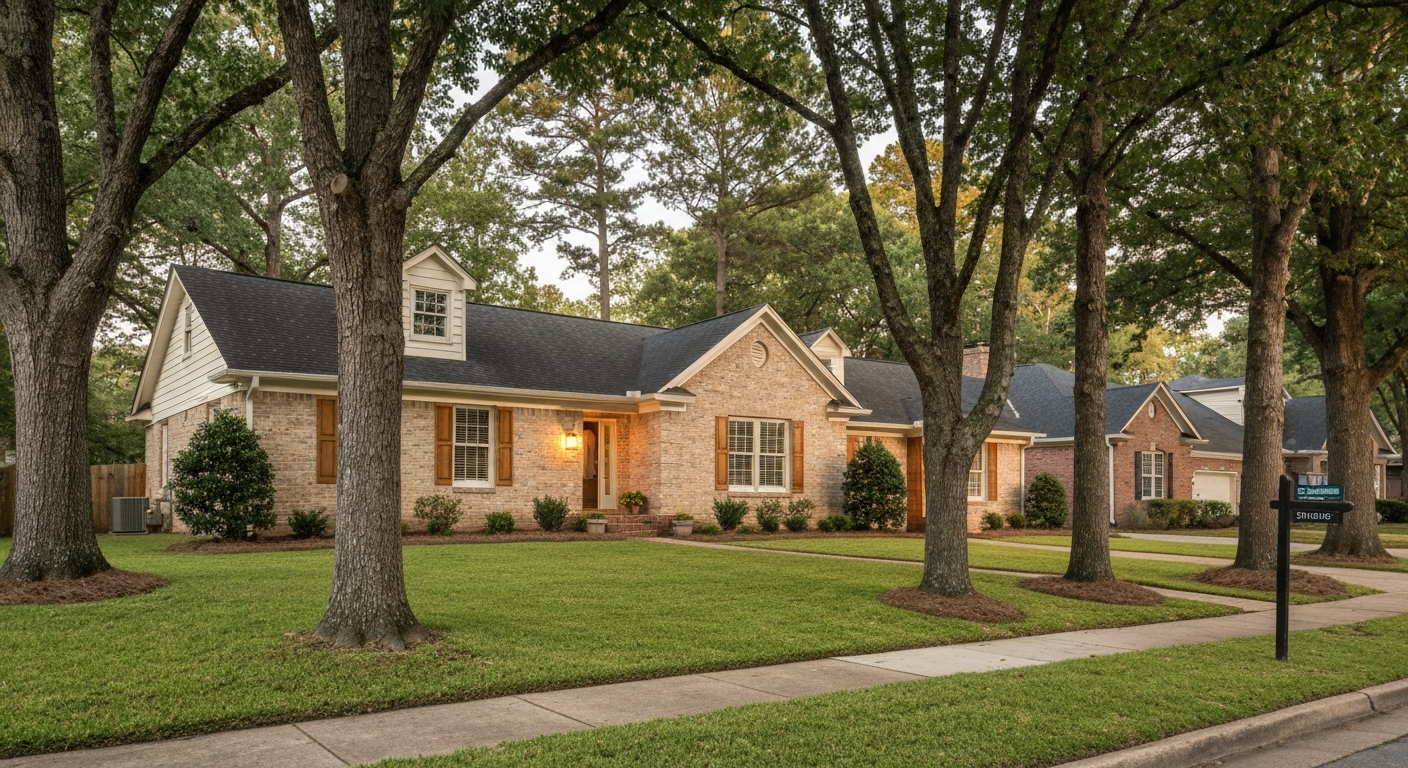
What are the Fort Gordon BAH rates for 2026, and how should CSRA landlords use them to price rentals? The DoD increased Basic Allowance for Housing nationally by an average of 4.2% for 2026, effective January 1. Fort Gordon rates range from roughly $1,200/month for lower enlisted without dependents to approximately $2,300/month for senior officers with dependents. For most 3-bedroom rentals in Evans and Grovetown, pricing in the $1,500–$1,900 range sits in the middle of the BAH band for E-5 through O-3 with dependents — the most common Fort Gordon renter household.
It's June. Fort Gordon moves happen year-round, but June through August is when the bulk of Army reassignments take effect across the country — and Fort Gordon, as the Army's Cyber Center of Excellence, processes hundreds of inbound assignments each summer. If you received PCS orders and are setting rent on your home before you leave the CSRA, you're pricing into a market that's actively filling right now. The families arriving to take your assignment are looking for homes today.
The question most service-member landlords get stuck on is "what should I charge?" In this market, that question has a calculable answer: your rent should align with what the most qualified military renters carry in housing allowance. That number is Basic Allowance for Housing — BAH — and the 2026 adjustment matters to your decision right now.
Getting BAH alignment right is not about undercutting the market. It's about understanding that a specific band of rates produces the highest-quality, longest-tenured applicant pool for your home. Price outside that band in either direction and your tenant profile shifts in ways that affect vacancy risk and long-term returns.
How BAH Works — and Why It's the Right Pricing Reference
Basic Allowance for Housing is a monthly housing stipend paid to service members who do not live in government quarters. The amount depends on three variables: pay grade (E-4, O-3, etc.), dependent status (with or without dependents), and duty station zip code. It is non-taxable income and does not move with the civilian market on a monthly basis — it is recalibrated once a year, every January 1, by the Defense Travel Management Office based on local rental survey data.
The DoD's design goal is to set BAH at the 95th percentile of median rental costs for each pay grade in each local market. In practice, this means that a well-priced rental property in the Fort Gordon footprint should sit comfortably within the BAH range for the rank tier most likely to rent it. BAH is not a coincidental ceiling — it is a government-calculated market rate.
For 2026, the DoD increased BAH by a national average of 4.2 percent, effective January 1. This is the third consecutive year of increases, reflecting sustained pressure on rental costs in markets across the country. In total, the DoD projects paying approximately $29.9 billion in BAH to roughly one million service members in 2026. The Fort Gordon-area adjustment tracks the national average, with some grades seeing slightly higher adjustments based on the local Augusta-area rental survey data.
One structural feature worth understanding: dependent status creates a meaningful rate differential. Service members with dependents receive approximately 19.7% more BAH than those without dependents at the same pay grade. For a 3-bedroom home, your applicants are almost exclusively households with dependents — that is the relevant column on the BAH table.
This is general guidance from a property manager — not legal or tax advice. For your specific BAH amount, use the official DTMO rate lookup at travel.dod.mil.
2026 Fort Gordon BAH: The Range and What It Means
Fort Gordon uses the Augusta, GA Metropolitan Statistical Area for its BAH calculation. For 2026, rates span from roughly $1,200/month at the low end for lower enlisted without dependents to approximately $2,300/month for senior officers with dependents, according to rate data published by MyBaseGuide for Fort Gordon. That is a $1,100/month spread across the full pay-grade spectrum.
Where your rental sits within that range depends entirely on who you're trying to attract — and that depends on what you have to rent.
A few landmarks that matter for pricing decisions:
The E-5 through O-3 core market. Sergeant, Staff Sergeant, and junior officer (Second Lieutenant through Captain) households represent the largest tenant pool at Fort Gordon. These grades with dependents carry BAH in the range that comfortably covers quality housing in the western Columbia County communities that military families prefer — Grovetown, Evans west of I-20, and the newer subdivisions near GA-104 and Harlem Road.
The senior enlisted tier (E-7 through E-9). Sergeant First Class, Master Sergeant, and Sergeant Major households carry higher BAH with dependents. These tenants are typically looking for 4-bedroom homes or larger 3-bedrooms in newer construction. They are a smaller applicant pool but represent stable, long-tenured tenancy — sergeants major often stay at Fort Gordon for 3+ years in role assignments.
The mid-grade officer market (O-4 and above). Major, Lieutenant Colonel, and above have BAH well above $2,000/month with dependents. These households target the Evans west corridors near Evans Town Center or the Fort Gordon gate-adjacent neighborhoods. They expect updated kitchens, larger square footage, and quality finishes.
For the exact rate for any pay grade and dependent status at Fort Gordon, the official DTMO BAH calculator at travel.dod.mil is your primary source. Third-party calculators are sometimes delayed in reflecting the January 1 adjustments.
Where CSRA Rents Land Relative to BAH
Putting market data next to BAH data is where pricing decisions actually get made.
According to RentCafe's May 2026 market data for Evans, GA, 3-bedroom apartments in Evans range from approximately $1,620 to $2,439. Single-family homes — the product type most military families strongly prefer over apartments — run in a comparable range, with quality 3-bedroom homes in established neighborhoods starting around $1,600-$1,700 and extending well above $2,000 for newer construction with upgraded finishes.
For Grovetown, RentCafe's 2026 Grovetown data shows apartment rents averaging around $1,358/month, while single-family rental homes span a broader range reflecting Grovetown's mix of older established neighborhoods and newer subdivisions built out in the past decade.
The practical sweet spot for BAH alignment:
| Property Type | Market Rent Range | Target Tenant Tier |
|---|---|---|
| 2BR apartment or townhome (Evans/Grovetown) | $1,200–$1,500 | E-4 through E-5, no dependents or with dependents |
| 3BR single-family home (Grovetown/Martinez) | $1,500–$1,800 | E-5 through O-2, with dependents |
| 3BR single-family home (Evans, updated) | $1,700–$2,000 | E-6 through O-3, with dependents |
| 4BR single-family home (Evans/Grovetown, newer) | $2,000–$2,400 | O-3 through O-5, with dependents; E-8/E-9 |
These ranges are not static — they move annually with BAH. But the relationship between property type and target tenant tier stays consistent. What changes each January is where the dollar thresholds land within each tier.

The BAH Alignment Strategy: Why Pricing at the Midpoint Beats Pricing at the Top
Here is a reality that experienced CSRA military landlords have learned through a few lease cycles: pricing your rental at the center of the BAH band for your target tenant tier — not at the absolute ceiling — tends to produce better long-term returns than pushing to the top of market.
The reason is tenant tenure. Military tenants at Fort Gordon stay for the duration of their assignment. Cyber Center of Excellence and Signal Corps assignments typically run 24 to 36 months. These tenants do not leave because they found a nicer apartment or their circumstances changed. They leave when the Army tells them to leave. That predictability is worth real money in a market where a single tenant turnover costs a landlord between $3,000 and $5,000 in make-ready, vacancy carrying costs, and leasing fees — see the detailed breakdown in our post on tenant turnover costs for CSRA landlords.
A home rented at $1,750/month with a 30-month military tenancy generates $52,500 in gross rent before the first turnover. A home priced at $1,950/month that sits vacant for two months between shorter-tenured civilian leases generates less over the same period when vacancy and turnover costs are subtracted.
The math usually favors capturing the large middle of the BAH distribution rather than chasing the top of market.
This is not an argument for underpricing. If your home is a 4-bedroom with updated finishes in a newer Evans subdivision, $2,200 is appropriate — that sits within BAH for O-3 through O-4 with dependents. The alignment strategy means matching your price to the BAH tier that fits your specific home, not simply defaulting to the lowest number that fills the vacancy.
McBride PM offers a free rental analysis for Fort Gordon-area owners through our contact page. Amber McBride runs our owner intake and can have a comparable rental analysis ready within 48 hours — before you finalize your rent price.
Why Military Tenants Are a Distinct Applicant Category
Military households are not simply government-employed civilians. Their financial and behavioral profile differs in ways that should change how you read an application and structure a tenancy.
BAH is guaranteed, tax-free income that doesn't depend on the job market. Unlike civilian income, BAH does not disappear if a company downsizes, if the tenant changes jobs, or if the economy softens. It continues as long as the service member remains on active duty. For landlords, this is as close to a rent guarantee as exists in the private market.
Leave and Earnings Statements replace pay stubs for income verification. An LES shows base pay, BAH, and BAS (Basic Allowance for Subsistence) broken out separately. These figures are verified military pay records, not self-reported income. McBride PM's screening process — documented in our tenant screening standards — accounts for this structure when evaluating military applicants. An E-5 with dependents may show a base-pay-to-rent ratio that looks marginal on a standard form, but their total compensation well exceeds the threshold for your rental.
Assignment orders create predictable, high-demand move-in windows. Military tenants do not browse casually — they move when orders arrive, typically with a 30-to-90-day lead time. Peak demand in the CSRA runs June through August, when the majority of Army reassignments take effect. A home available June 1, priced correctly, will see qualified applicants within days of listing.
SCRA provides a defined early-termination mechanism. If a service member receives qualifying PCS orders mid-lease, the Servicemembers Civil Relief Act allows lease termination with 30 days' written notice and a copy of orders — regardless of remaining lease term. This is federal law and it supersedes state statute and any contrary lease language.
SCRA is sometimes framed as a landlord risk. In practice, it is a known, manageable mechanism. You will know when a tenant is leaving and approximately how much notice they can give. You can prepare your make-ready and begin marketing before the unit is vacant. That is meaningfully better than a civilian tenant who stops paying and stops communicating. For the full mechanics of how SCRA lease terminations work, see our detailed guide on SCRA lease breaks for Augusta-area landlords.
This is general guidance from a property manager — not legal advice. Consult a Georgia-licensed attorney for guidance specific to your situation.
PCS Season Is Right Now: Positioning Your Home for June–August Moves
If you're reading this in June 2026, you're at the center of the military rental cycle. The same dynamics that drove your own PCS are now filling the demand side of the market. How you position your rental in the next 30 days affects how quickly it fills and at what price.
Timing your availability listing matters. A home that is available June 1 and priced correctly can be under lease within three to four weeks. The same home vacant in October will sit noticeably longer because the inbound assignment wave has passed. If your current lease ends in June, begin marketing immediately — do not wait until the unit is vacant.
List the home before vacancy if possible. Qualified military applicants apply 30 to 60 days before their report date. A listing with a confirmed availability date, professional photos, and a clear property description can generate applications before the home is empty. McBride PM lists homes for lease as soon as the vacancy is confirmed, not after move-out.
Specify commute time to Fort Gordon gate. Active-duty applicants care about drive time from the home to the installation gate, not just the zip code or city name. Grovetown via Jimmie Dyess Parkway runs approximately 8–12 minutes to Gate 1. Evans via Fury's Ferry Road adds 5–10 minutes depending on traffic. Most listing platforms display address proximity but not actual gate commute — being explicit in your listing description removes a common point of uncertainty for applicants.
Include BAH alignment language in your listing. Military tenants frequently search for homes described as "within BAH" for their pay grade. If your home is priced to fall within the BAH range for E-5 through O-3 with dependents, noting that in the listing description reduces friction and pre-qualifies your applicant pool. McBride PM includes BAH alignment notes in our listings for properties in the Fort Gordon market.
If you are PCS-ing out of the area and managing this remotely, our PCS Landlord Quick-Start Guide walks through the pre-departure checklist — including documentation, inspection, and owner setup — before your move date. We also cover the process of finding and managing a reliable local property manager in our overview of McBride PM's property management services.
Annual BAH Adjustments: Building Review Into Your Lease From Day One
BAH changes every January 1. If you treat this as a surprise, it will feel like one. If you build it into your lease structure from the start, it becomes a straightforward annual process.
The mechanics work like this: DoD announces new rates in December for the following January 1. When BAH increases — as it has for three consecutive years — your tenant is receiving more housing money starting January 1 of the new year. If their BAH went up 4.2% and their rent stayed flat, they captured the entire increase as savings. That is fine for them, and not necessarily wrong as a strategy — stable tenants who feel well-treated do not look for reasons to move. But you also have the option to align rent increases with the BAH cycle, which most experienced military landlords do.
Practical guidelines for BAH-aligned lease renewals:
-
January 1 effective dates for increases. Aligning your renewal with the DoD BAH cycle makes the increase feel logical to military tenants. They understand January 1 changes. Rent adjustments that take effect on the same date BAH changes are the least friction-generating increases in this market.
-
Percentage-based increases track BAH more naturally than flat amounts. A 4.2% increase on a $1,700/month lease is $71/month. A flat "$100 increase" may or may not correspond to the tenant's BAH change. When you frame the increase as a percentage that tracks BAH, the conversation is simpler.
-
Give 60 days' notice for annual renewals. Georgia's statutory notice period for rent changes is 30 days for month-to-month tenancies, but 60 days gives military tenants time to confirm their assignment status before committing to another lease term. A tenant who is waiting for re-assignment notification cannot commit to a 12-month renewal if they do not know whether they will receive orders. Sixty days of lead time solves this.
-
Expect some tenants to request lease extensions rather than full renewals. Military tenants who are awaiting orders but have not received them may want a 6-month or 90-day extension rather than a full 12-month term. Shorter-term renewals are common in this market and carry a modest premium — $50 to $100/month above the 12-month rate is standard.
For a full guide on timing and communicating rent increases in the CSRA market, see our post on when and how to raise rent on your Augusta rental property.
Why This Market Has a Structural Advantage Other CSRA Neighborhoods Don't
The Fort Gordon rental corridor — Evans, Grovetown, western Martinez — operates in a rental market with structural demand floors that most civilian-only submarkets cannot replicate. Fort Gordon has roughly 27,000 military personnel on post at any given time. A portion of those live in Balfour Beatty on-post housing; the majority live off-post, in exactly the communities where McBride PM manages rentals.
That military demand floor creates a countercyclical cushion. When civilian employers contract or relocate, military demand at Fort Gordon is set by Army readiness requirements — not by the local economy. The Cyber Center of Excellence mission, which is central to the Army's cyber and intelligence capabilities, is a strategic priority that does not relocate based on CSRA economic conditions. Augusta University Medical Center and the Savannah River Site provide a second and third demand anchor, but it is Fort Gordon that insulates the Columbia County rental market from the volatility that hits rental markets dependent on a single civilian employer.
Understanding this market structure is part of what makes BAH alignment more than a pricing tactic — it is a long-term portfolio decision. A rental property priced for the military demand floor in Evans or Grovetown is a fundamentally different asset than an apartment-heavy Augusta city property with no BAH backstop.
If you are evaluating whether to keep your Fort Gordon-area home as a long-term rental or sell it before your PCS, the owner FAQs on our website walk through the core decision framework. For a data-based look at why Columbia County has historically outperformed the Augusta city core for rental investors, see our analysis on the Columbia County vs. Augusta rental market comparison.
Noah McBride and Amber McBride work with PCS landlords throughout the Fort Gordon footprint — from the Grovetown subdivisions near Gate 6 to the Evans neighborhoods off Fury's Ferry. Pricing your property correctly for the military market is the single most impactful decision you will make before you leave.
Pricing a Fort Gordon-area home and want to know where it lands against 2026 BAH?
McBride Property Management handles PCS landlord onboarding across the CSRA — from comp analysis and BAH-aligned pricing to tenant screening and SCRA-compliant leases. If you are heading out on orders, start with a free rental analysis before you finalize your rent price. Amber McBride runs our owner intake and can have a comparable analysis on your specific address within 48 hours.
Request a free rental analysis → or call (706) 339-2874. Download our PCS Landlord Quick-Start Guide for the complete pre-departure checklist.
Noah McBride, Broker McBride Property Management 706.339.2874 Guiding you home.
Ready to Talk Property Management?
McBride Property Management handles the details while you enjoy the returns.
Talk to our team about your property