Georgia Tenant Rights in 2026: The CSRA Renter's Complete Guide

What are Georgia tenants' rights when renting in the CSRA in 2026? Georgia's Safe at Home Act gives every CSRA renter a legal right to a habitable property and caps security deposits at two months' rent. Landlords must return deposits within 30 days of move-out or lose the right to withhold anything—and face triple damages under O.C.G.A. §44-7-34 if they wrongfully keep your money. Knowing these rules before you sign protects your deposit and your home.
Summer in Augusta is moving season. Between military families PCS-ing to Fort Gordon, Augusta University students shifting apartments, and professionals relocating to Evans or Grovetown for jobs at Savannah River Site or Wellstar MCG, more people sign new leases in June and July than at any other time of year.
Most of them sign without fully understanding what Georgia law says about their money, their home's condition, or their right to stay. That's not a knock on renters — until 2024, Georgia genuinely didn't give tenants much to stand on. The state was one of the last in the country to adopt a statutory warranty of habitability. That changed on July 1, 2024, when the Safe at Home Act (HB 404) took effect.
If you're renting in Augusta, Evans, Grovetown, Martinez, or anywhere else in the CSRA, this is the version of your rights that actually applies to you right now.
What Renting in the CSRA Actually Costs in 2026
Before getting into legal protections, a quick market calibration. As of mid-2026, the median rent across all unit types in Augusta (Richmond County) sits around $1,300 per month — roughly 33 percent below the national median, which is one of the CSRA's persistent draws for renters and investors alike. RentCafe's Augusta market tracker reflects current pricing by unit size.
Breaking it down by bedroom count:
| Unit Type | Approximate Monthly Rent (Augusta, 2026) |
|---|---|
| Studio | ~$953 |
| 1-Bedroom | ~$1,094 |
| 2-Bedroom | ~$1,225 |
| 3-Bedroom | $1,568+ |
Rentals in Columbia County — Evans, Grovetown, and Martinez — run slightly higher, averaging around $1,342 per month, reflecting the suburb's newer construction, proximity to Fort Gordon, and established infrastructure. If you're looking at specific properties, the McBride PM current listings show live CSRA availability; inventory tightens in June and July as the back-to-school window drives a secondary surge.
Moving costs to budget: Georgia landlords can now charge no more than two months' rent as a security deposit (more on that below), plus your first month's rent upfront. On a $1,400/month house in Grovetown, that's up to $4,200 due before your first night. Understanding the security deposit rules matters because that money is yours — you're entitled to get it back.
Georgia Security Deposit Rules: Your Money, Your Rights
Georgia's security deposit law lives in O.C.G.A. §§44-7-30 through 44-7-37. The Safe at Home Act's most immediate tenant-friendly change was adding a hard cap: no landlord can require more than two months' rent as a security deposit for leases signed or renewed on or after July 1, 2024.
Beyond the cap, there's a specific set of rules landlords must follow — and clear consequences when they don't.
What your landlord must do at move-in
Before you hand over a deposit, Georgia law (O.C.G.A. §44-7-33) requires your landlord to:
- Give you a written list of all existing damage to the rental unit
- Have you sign that list
- Place your deposit in an interest-bearing escrow account OR post a surety bond with the Clerk of Superior Court
- Notify you in writing of where the deposit is held
If your landlord skips any of these steps, they have waived their right to keep any portion of your deposit under Georgia law. This is not a technicality — it is a hard rule. Landlords who don't follow the intake procedure start the tenancy with zero legal standing to make deductions.
Ask for the escrow account name and institution in writing before or at signing. A landlord running a clean operation will give it to you without hesitation.
What happens at move-out
Within three business days of you vacating, your landlord must inspect the unit and prepare a written list of damages they intend to charge against your deposit, with estimated dollar values.
Then, within 30 days of the end of your tenancy, they must either return the full deposit or return the remaining balance along with a written itemized statement of all deductions.
If they miss the 30-day window without providing the statement, they forfeit the right to keep anything. Under O.C.G.A. §44-7-34, if a landlord wrongfully withholds your deposit, you can sue in magistrate court for three times the wrongfully withheld amount, plus attorney's fees and court costs.
That triple-damages provision is real, and Georgia magistrate court is designed to be accessible without a lawyer.
Normal wear and tear vs. actual damage
Your landlord can deduct for actual damage you caused — a broken door, carpet stains beyond normal use, a wall with multiple unpatched holes. They cannot deduct for:
- Paint fading over a normal tenancy
- Carpet wear after several years of regular use
- Minor scuffs from normal furniture movement
- General cleaning if you left the unit in reasonably clean condition
Magistrate court judges in Augusta and Columbia County apply a "reasonable wear and tear" standard that tilts toward the tenant for small, cosmetic items.
The Safe at Home Act: What "Habitable" Means in Georgia Law
Prior to July 1, 2024, Georgia was one of a handful of states with no implied warranty of habitability. If your heat failed in January and your landlord ignored you, your main remedy was to stop paying rent and get sued — a terrible position to be in.
HB 404, the Safe at Home Act, changed that. According to the National Low Income Housing Coalition, the Act established Georgia's first statutory habitability standard. For any lease signed or renewed on or after July 1, 2024, Georgia landlords must now keep rental units:
- Structurally sound: Roof, walls, floors, and foundation that don't create safety risks
- Plumbing functional: Working pipes, water supply, and drainage in all fixtures
- Heating and cooling operational: The Act specifically includes cooling as a required utility — critical in Augusta summers where sustained 95-degree heat is routine
- Pest-free: Free from rodent, insect, or vermin infestations
- Compliant with applicable building codes: If local fire or building code standards apply, your landlord is now legally responsible for meeting them
The law does not specify a repair timeline — your lease should define how to submit repair requests and how quickly the landlord is expected to respond. If it doesn't, and your landlord is unresponsive, you can contact Richmond County or Columbia County code enforcement to trigger an official inspection. An open code complaint also starts the clock on retaliation protections (see below).
What to do when something breaks
- Submit every repair request in writing — email is fine; text works if you save it
- Give your landlord reasonable time to respond — typically 7 to 14 days for non-emergency repairs
- For a true emergency (no cooling in an Augusta summer, active water leak into living space, no heat in winter), reasonable response time is 24 to 72 hours
- If there's no response, send a follow-up in writing and reference the original request with its date
- If still nothing, contact your local code enforcement agency
Georgia does not currently give tenants an explicit "repair and deduct" right — you cannot pay for a repair and subtract it from rent without a court order. What you do have is the right to demand compliance and, if necessary, bring the landlord to court for breach of the habitability warranty. This is general guidance from a property manager — not legal advice; talk to a Georgia-licensed attorney for your specific situation.
Privacy and Entry: When Can Your Landlord Come In?
Georgia's Landlord-Tenant Code does not specify a minimum notice period for landlord entry the way many other states do. However, most Georgia leases include a notice requirement — typically 24 to 48 hours — and courts enforce lease terms against landlords.
If your lease doesn't address entry, the practical standard is reasonable advance notice, which Augusta-area courts have generally treated as at least 24 hours. Exceptions include genuine emergencies — fire, flooding, gas leak — where immediate access is necessary.
Landlords cannot use entry as a harassment tool. If yours is entering repeatedly without notice or clear purpose, document every instance with dates and times. This can become evidence of retaliation if you've recently asserted a habitability right.
Your Three-Day Right to Cure Before Eviction
One of the most significant changes in the Safe at Home Act was codifying a pre-filing grace period for non-payment of rent. Here's how it works:
Before your landlord can file a dispossessory action (Georgia's term for eviction) for non-payment, they must serve you with written notice that includes:
- The total amount owed (rent, any fees, any utility charges specified in the lease)
- A statement that you have three business days to pay in full
If you pay every penny owed within those three business days, the landlord cannot file. Do not assume a partial payment stops the clock — in Georgia, partial payment does not prevent an eviction filing.
The three-day cure period applies to non-payment. If you've violated a non-financial lease term (unauthorized pet, unauthorized occupant), different notice requirements apply.
If you receive a written notice to vacate or pay, act immediately. Three business days is shorter than it sounds over a weekend or around a holiday. Options include paying in full, negotiating a payment plan with your landlord in writing, seeking emergency rental assistance through local programs, or consulting with a legal aid attorney. Our resident FAQs include contact information for area assistance resources.
Retaliation: What Your Landlord Cannot Do After You Report a Problem
The Safe at Home Act paired its habitability protections with an explicit anti-retaliation provision. For at least three months after you:
- Assert a habitability right under the Act
- Submit a written repair request
- File a complaint with a local code enforcement agency
- Contact a building inspector
…your landlord cannot raise your rent, reduce services, fail to renew your lease when they otherwise would, or file a dispossessory action against you — unless they can demonstrate a genuinely independent reason unrelated to your complaint.
If any of these things happen within three months of your request or report, Georgia courts presume retaliation. The burden then shifts to the landlord to prove the action was taken for a different, legitimate reason.
Document everything. Date-stamp your repair requests. Keep copies of all correspondence. If you believe you're facing retaliation, contact Georgia Legal Aid (georgialegalaid.org) or a private Augusta-area tenant attorney before doing anything else. This is general guidance — not legal advice; an attorney is the right resource when you believe your rights are being violated.
What to Document at Move-In — and What to Keep When You Leave
This section is worth printing.
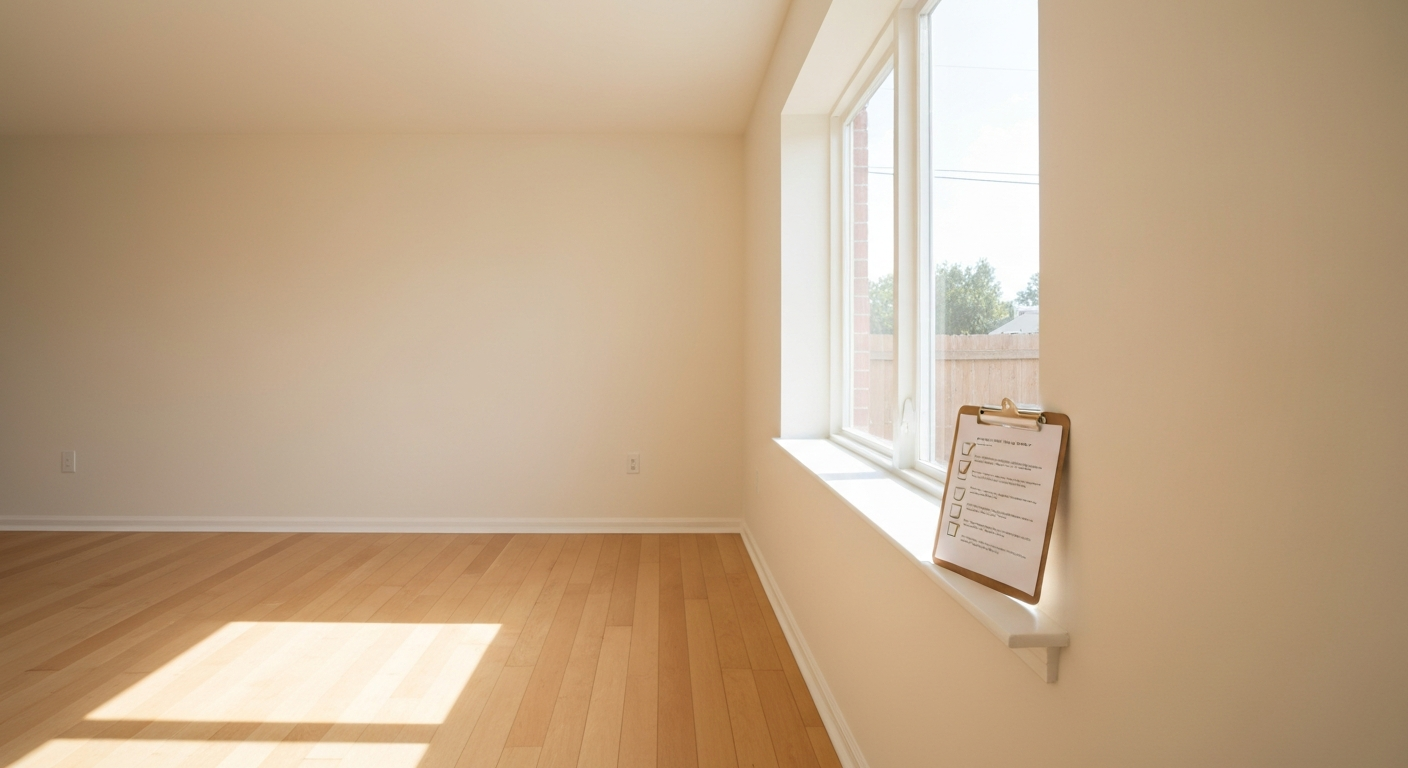
At move-in: document everything before your first night
- Walk every room with your landlord or their agent and complete the move-in inspection form together. If none is provided, download McBride PM's Move-In Inspection Checklist and bring it yourself
- Take time-stamped photos of every wall, floor, ceiling, fixture, and appliance — front of the oven, inside the refrigerator, every closet, every corner
- Test all windows and doors to confirm they lock
- Run every faucet, flush every toilet, and check that all light fixtures work
- Note any existing damage in writing, no matter how small, and make sure your landlord or property manager signs the list
If your landlord refuses to complete a move-in inspection or sign a damage list, that is a significant warning — and under Georgia law it actually works in your favor, since their failure to follow the intake procedure can invalidate their right to retain any portion of your deposit.
At move-out: give yourself enough runway
- Provide written notice to vacate according to your lease terms — most CSRA leases require 30 days minimum. Download a 30-Day Notice to Vacate form and send it via certified mail or email with delivery confirmation
- Clean the unit thoroughly — this is the single most common basis for legitimate deposit deductions
- Request a walkthrough with your landlord or property manager and get the results in writing
- Take time-stamped photos covering the same angles as your move-in photos
- Return all keys, garage openers, and access devices and get a written receipt
- Provide a forwarding address in writing, since your landlord must mail the deposit and any itemized statement to you within 30 days
If you're a McBride PM resident, our Move-Out Inspection Checklist walks through this room by room. Our Operations Manager Amber McBride coordinates the move-out process for every departing resident, including the final inspection scheduling and deposit accounting in AppFolio.
If a deposit dispute ends up in magistrate court
Magistrate court in Augusta (Richmond County) and in Columbia County is specifically designed for these disputes — no attorney is required. Filing fees are modest. You'll present your documentation: photos, inspection lists, written communications, payment records. The judge applies Georgia's security deposit statute directly.
The triple-damages provision under O.C.G.A. §44-7-34 gives tenants real leverage in genuine cases of wrongful withholding — and magistrate court judges in the CSRA see these cases regularly. Being well-documented is the difference between a full recovery and a long fight.
Finding a CSRA Rental Where These Standards Actually Apply
Knowing your rights is most useful when you're renting from a landlord or property management company that follows them. Not everyone does.
When evaluating a prospective rental, ask directly:
- Where is my security deposit held, and can I have the escrow account in writing?
- Do you conduct a documented move-in inspection with a signed damage list?
- What is your written process for maintenance requests and how quickly do you respond?
- Can I see a copy of your tenant screening standards before I apply?
McBride PM publishes its Tenant Screening Standards publicly so applicants know exactly what we look for. Every property we manage starts with a documented move-in inspection, deposit held in escrow with written notification to the resident, and maintenance tracked through AppFolio.
Browse our available listings in Evans, Grovetown, Martinez, and Augusta, or download the rental application directly.
For more on specific communities within the CSRA:
- Renting in Evans, GA — Columbia County's most established suburb, with easy access to Fort Gordon's west gate
- Renting in Grovetown, GA — one of the area's fastest-growing communities, with newer construction and shorter commutes to the SRS corridor
- Renting in North Augusta, SC — the South Carolina side of the river, with Aiken County's different landlord-tenant framework
Questions about the process? Our resident FAQs cover the application timeline, screening criteria, and what to expect from move-in to move-out.
Looking for a CSRA rental managed the right way?
McBride Property Management handles properties in Evans, Grovetown, Martinez, and Augusta with a straightforward process: documented move-in inspection, deposit held in escrow, maintenance tracked in AppFolio, and every requirement of Georgia law followed from day one. Reach our tenant line at (706) 339-2874 or browse current listings below.
Noah McBride, Broker McBride Property Management 706.339.2874 Guiding you home.
Ready to Talk Property Management?
McBride Property Management handles the details while you enjoy the returns.
Talk to our team about your property