Renting in North Augusta, SC: Your Complete 2026 Tenant Guide
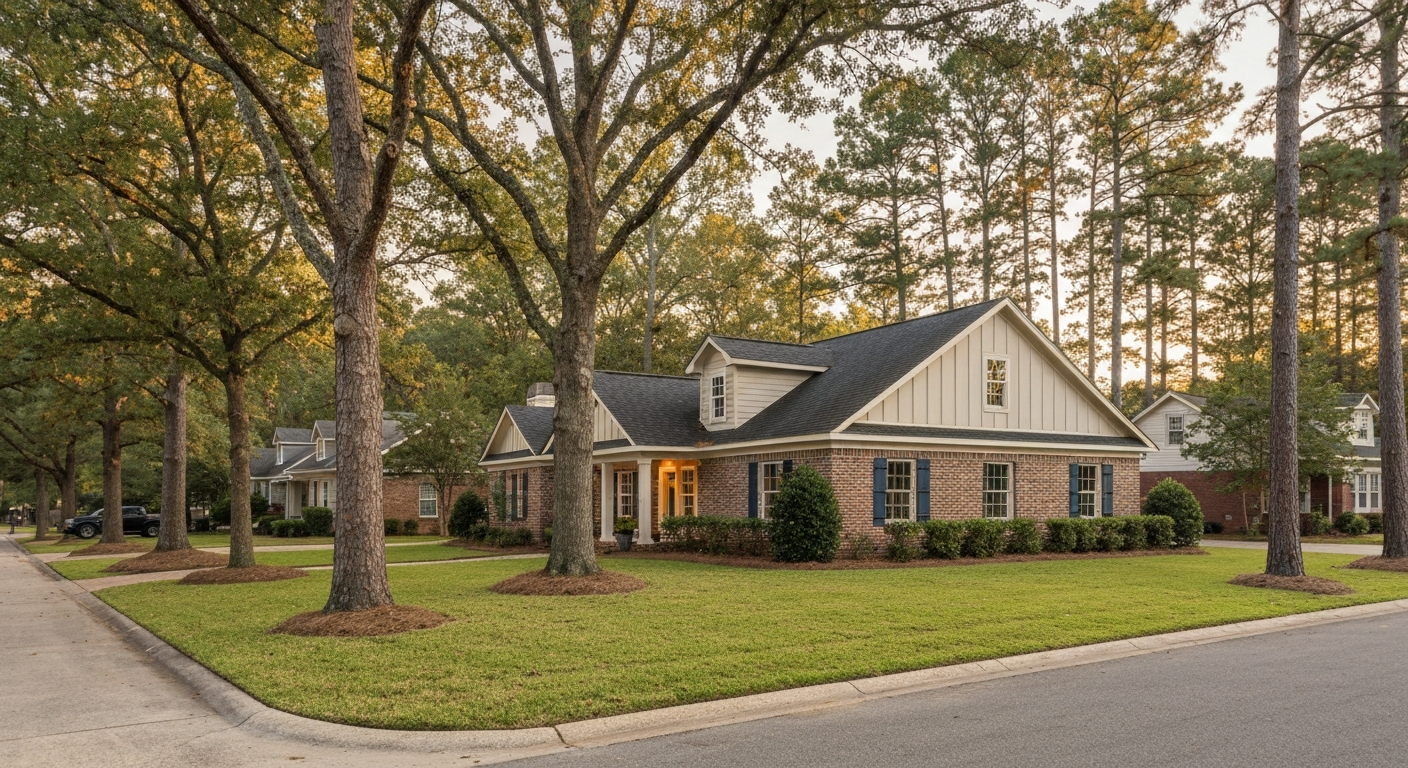
What do renters need to know before signing a lease in North Augusta, SC? North Augusta's median rent sits around $1,300—roughly 25% below the national average. Tenants are protected by South Carolina's Residential Landlord and Tenant Act (SCRLTA, SC Code Title 27, Chapter 40), which sets a 30-day deposit return window, requires 24 hours' notice for landlord entry, and gives you a 14-day repair deadline after written notice.
The CSRA's rental inventory is running about a third short of what the market needs. A Post and Courier analysis of the regional housing supply found roughly 2,500 homes listed when the region needed closer to 4,000 for a balanced market, with Fort Gordon growth and Savannah River Site employment among the primary demand drivers. North Augusta—on the South Carolina side of the Savannah River—sits squarely in the middle of that demand picture, and in 2026 it's drawing tenants who want access to Augusta's employment centers without Augusta's price points.
If you're considering renting in North Augusta, there are a few things worth understanding before you sign anything: what the market actually looks like right now, which neighborhoods suit which lifestyles, and—critically—what your rights are under South Carolina tenant law, which differs in some meaningful ways from what most Georgia renters are used to.
This guide covers all of it.
What You'll Pay: North Augusta Rent Prices in 2026
North Augusta rents are affordable by most CSRA standards, and they've softened slightly heading into summer 2026. According to RentCafe market data, the average rent across all unit types in North Augusta runs about $1,341 per month, with the median sitting closer to $1,300—approximately 25% below the national average of $1,552.
By bedroom count, here's the current picture:
| Unit Type | Avg. Monthly Rent | Avg. Sq. Footage |
|---|---|---|
| 1-Bedroom | ~$1,233 | ~717 sq ft |
| 2-Bedroom | ~$1,316 | ~1,014 sq ft |
| 3-Bedroom | ~$1,799 | ~1,394 sq ft |
Source: RentCafe, early 2026. Single-family home rentals vary more widely by neighborhood and condition.
Single-family rentals—which make up a significant portion of North Augusta's rental stock—typically run higher than apartment averages, particularly in established neighborhoods like Hammond's Ferry. Budget $1,400–$1,900 for a well-maintained 3-bedroom house depending on location, age of the home, and whether utilities are included.
The broader market context matters here: rent growth in North Augusta has been flat to slightly negative compared to the prior year. If you're timing a lease renewal or starting a new search this summer, 2026 is a more tenant-favorable moment than 2024 or early 2025.
North Augusta's Rental Neighborhoods: Where to Focus Your Search
North Augusta isn't one monolithic area. Where you land affects commute times, walkability, neighborhood character, and what you'll pay. Here's a practical breakdown.
Hammond's Ferry
Hammond's Ferry is the neighborhood most people picture when they think of desirable North Augusta rentals. It's a master-planned community with a walkable town center, trail access, consistent maintenance standards, and architecture that holds together across the whole neighborhood. Single-family rentals in Hammond's Ferry command a premium—often $1,600–$2,000 or more for 3-bedroom homes—but the neighborhood character is cohesive and the resale-grade construction quality tends to mean fewer maintenance issues. Good option if you want something intentionally designed and don't mind paying for it.
Riverside Village
The most visible addition to North Augusta's rental landscape, Riverside Village sits along the Savannah River adjacent to SRP Park. The development includes multiple apartment communities totaling several hundred units, a Crowne Plaza hotel, restaurants, and a riverfront amphitheater. The final residential phase reached completion in early 2026. Rents at Riverside Village lean toward the upper end of the North Augusta market, reflecting the amenity package and walkable riverfront location. For tenants who want a lifestyle-forward environment—easy access to dining, live events, and trails—it's the most finished version of that in North Augusta right now.
West Augusta / Clearwater Corridor
Farther into Aiken County, away from the river, you'll find more traditional suburban neighborhoods and older housing stock. Rents here are more moderate—single-family homes often run $1,200–$1,500—but the tradeoff is a longer drive to downtown North Augusta and the river. The Clearwater area also sits closer to Aiken County employers, including contractors and suppliers tied to the Savannah River Site, if that's your commute direction.
Downtown North Augusta and the SRP Park Area
The blocks surrounding SRP Park and North Augusta's downtown commercial corridor offer a mix of older homes, duplexes, and small multifamily. Rent tends to be competitive with the Clearwater area, and you gain walkability to restaurants, the amphitheater, and the Savannah River trail system. If proximity to entertainment and the riverfront is the priority over square footage, the downtown corridor is worth including in your search.

Your Rights as a Tenant Under South Carolina Law
South Carolina's Residential Landlord and Tenant Act—SC Code Title 27, Chapter 40—governs the relationship between you and your landlord in every North Augusta rental. If you're coming from Georgia or renting on the South Carolina side of the CSRA for the first time, knowing the basics before you hand over a deposit is time well spent.
Security Deposits
South Carolina sets no statutory cap on how much a landlord can charge for a security deposit. A landlord can ask for one month, two months, or more—the law doesn't limit it. In practice, most North Augusta market-rate landlords ask for one month's rent as a deposit, but you should confirm before signing and negotiate if the amount seems excessive.
What the law does protect is the return process. Your landlord must return your deposit—or provide a written, itemized statement of any deductions—within 30 days after you move out and the tenancy formally ends. That 30-day clock starts from the later of the date you vacate or the date you make a written demand for return. If your landlord misses that window without cause, you can recover three times the wrongfully withheld amount plus reasonable attorney's fees under SC Code § 27-40-410.
Practical implication: keep documentation. Save your move-in inspection checklist. Photograph the property when you leave. Send a written demand for your deposit by email or certified mail. These steps create the record that protects you.
Landlord Entry
Your landlord cannot enter your unit without giving you notice first. The SCRLTA requires at least 24 hours' advance notice before entry, and that entry must occur at a reasonable time—typically interpreted as normal business hours unless you've agreed otherwise in the lease. Emergency situations involving imminent danger to the property or your safety are the only exception where notice can be waived.
If your landlord enters repeatedly without proper notice, document every occurrence in writing—date, time, and circumstances. Repeated unauthorized entry can constitute harassment under SC law and gives you grounds to address it formally.
Habitability and Repairs
Your landlord is required to maintain your unit in a habitable condition: functioning heat, working plumbing, operational electrical systems, weatherproofing, and no conditions that pose a health or safety risk. When something breaks and your landlord is responsible for the fix, South Carolina's process is specific:
- Submit your repair request in writing. This step is not optional if you want legal protection—verbal requests don't start the clock.
- Your landlord has 14 days after receiving written notice to complete the repair.
- If the repair isn't made in 14 days and the failure materially affects your health or safety, South Carolina law gives you remedies. Depending on the severity, these include the right to terminate the lease (after additional proper notice) or, in certain situations, to arrange for repairs and deduct the cost from rent.
Email and text messages generally work for written notice; they create a timestamp. For significant repairs, a written letter with a clear date is worth the extra step. If your landlord manages through a professional property management company, direct your written notice to that company—they're responsible for ensuring the 14-day timeline is met.
Eviction Protections
If you fall behind on rent or violate a lease term, your landlord must go through the legal eviction process. South Carolina does not allow self-help evictions—no changing your locks, removing your belongings, or shutting off utilities. Those actions are illegal regardless of whether you owe rent.
For non-payment situations, your landlord must provide written notice and an opportunity to pay. For lease violations, South Carolina law requires a 14-day notice to cure—meaning you have 14 days to fix the violation before eviction proceedings can be initiated. If you receive any formal notice, read it carefully, respond in writing, and seek legal advice if the situation is serious. The South Carolina Bar's public resources include referrals for tenant legal assistance.
For a complementary look at how these rules apply from the landlord's perspective—useful context for understanding what your landlord is supposed to be doing—see our breakdown of South Carolina landlord-tenant laws for Aiken-area rental owners.
How SC Tenant Law Compares to Georgia: Key Differences
If you're moving from the Georgia side of the CSRA—Augusta, Evans, Grovetown, Martinez—or if you've ever rented in Georgia before, a few things work differently in South Carolina.
| Provision | South Carolina | Georgia (post-Safe at Home Act) |
|---|---|---|
| Security deposit cap | No statutory cap | 2 months' rent (HB 404) |
| Deposit return window | 30 days | 30 days |
| Repair deadline | 14 days (written notice) | 30 days (written notice) |
| Landlord entry notice | 24 hours | "Reasonable notice" (typically 24 hrs) |
| Penalty for deposit violation | 3× withheld + attorney's fees | 3× withheld + attorney's fees |
The repair timeline is the most practically significant difference. South Carolina's 14-day window is faster, but it only runs from written notice—which means you have to actually put the request in writing to get that protection. Georgia's Safe at Home Act gives landlords 30 days to respond, which is longer but still better than the informal "I'll get to it" standard that existed before HB 404.
The deposit cap difference matters mostly at move-in. In South Carolina, a landlord asking for two months' rent upfront is within their legal rights. In Georgia, that same request would be capped at two months and couldn't exceed that amount under current law.
Both states prohibit retaliation: if you report a legitimate habitability issue to local authorities or invoke your legal rights, your landlord cannot raise your rent, file for eviction, or otherwise retaliate against you in response.
Renters insurance is worth carrying in either state. A basic policy covers your personal belongings, provides liability protection, and often covers temporary living expenses if your unit becomes uninhabitable due to a covered event. Our guide to renters insurance in Georgia covers what a standard policy typically includes—nearly all of it applies equally in South Carolina, where renters insurance is not mandated by state law but is commonly required by individual leases.
This is general guidance from a property manager—not legal or tax advice. For your specific situation, consult a South Carolina-licensed real estate attorney.
What to Check Before You Sign a North Augusta Lease
North Augusta leases can vary considerably in what they ask of you. Here are the provisions worth reading carefully before you commit.
Security deposit amount and condition documentation. There's no cap in South Carolina, so look closely at what's being charged and under what circumstances it can be withheld. The lease should establish—or you should request—a written move-in inspection checklist that both you and the landlord sign at possession. That document is your primary protection against improper deductions when you move out. Without it, disputes become your word against your landlord's.
Repair and maintenance responsibilities. South Carolina allows landlords to shift certain maintenance tasks to tenants in a lease—HVAC filter changes, lawn care, pest control—as long as the agreement is made in good faith and doesn't undermine the landlord's core habitability obligations. These clauses are common in single-family rentals. Read them carefully, ask for clarification on anything ambiguous, and make sure you understand who calls the HVAC company when something breaks versus who replaces the filters monthly.
Pet provisions. If you have pets, confirm explicitly whether the property allows them, what any pet deposit or monthly pet rent looks like, and whether there are breed or size restrictions. Get all of this in writing in the lease before you move in. Pet policies not specified in writing leave too much room for dispute later.
Lease term and renewal mechanics. A 12-month lease locks in your rate in a rising market; a month-to-month lease gives you flexibility to move without breaking a term. Know exactly which you're signing and what the required notice periods are—both for renewal and for termination. Many North Augusta leases require 30–60 days' written notice to vacate; missing that window can result in a rent obligation you didn't expect.
Utility responsibilities. Some North Augusta rentals bundle water or trash into the rent. Others don't. Clarify exactly which utilities are included before you sign so your first month's total cost isn't a surprise.
If you want to see what McBride PM looks for when evaluating rental applications before you apply, our Tenant Screening Standards are publicly available.
Renting Near Fort Gordon: The North Augusta Commute
Fort Gordon families often concentrate their search on Evans and Grovetown—both within 10–15 miles of the main gate. North Augusta extends that commute to roughly 18–22 miles depending on where in the city you're renting, typically translating to 25–35 minutes via I-520 and Gordon Highway on a normal weekday morning. That's meaningful extra drive time, and for families where someone has an early formation or a job that requires on-post presence at irregular hours, it's worth factoring honestly.
That said, North Augusta makes more sense as a base when both partners work in different directions—one toward Fort Gordon and one toward the Savannah River Site, which employs more than 10,000 workers roughly 25 miles south of Aiken. For that split-commute household, North Augusta sits in a reasonable middle ground.
North Augusta also carries a lower average rent than Evans or Grovetown for comparable square footage, which is relevant when you're making a military budget work. If your BAH rate aligns with the $1,200–$1,600 range for a 2–3-bedroom home, North Augusta opens options that might be tighter on the Georgia side.
If you're a newly arriving Fort Gordon family starting your search, our guide to renting as a military family moving to Augusta covers the Fort Gordon-specific context—BAH rates, application timelines, and how to coordinate a move when you're still at your current duty station.
How to Apply for a North Augusta Rental Through McBride PM
McBride Property Management manages rental properties on both sides of the CSRA, including homes in North Augusta and Aiken County. The application process is straightforward and can be completed remotely if you're relocating from out of the area.
Here's how it works:
- Browse current available rentals—listings are updated as properties become available.
- Request a showing for properties that fit your needs. In-person showings are available; for out-of-area applicants, video walkthroughs can often be arranged.
- Submit an application. You'll need a government-issued ID, proof of income (recent pay stubs, an offer letter, or bank statements), and rental history information.
- We conduct a background and credit review based on published criteria—those criteria are in the Tenant Screening Standards linked above, so you can review them before you apply.
- If approved, we'll walk through the lease terms together, complete the move-in inspection as a documented process, and confirm the property's condition in writing before you take possession.
Amber McBride oversees tenant onboarding and is the right person to talk to if you have questions about the process, specific property details, or timeline. The goal is to get you into a property without ambiguity on either side—documented from day one.
Looking for a rental in North Augusta, Aiken, or anywhere in the CSRA?
McBride Property Management manages properties across both sides of the river—North Augusta, Aiken, Evans, Martinez, Grovetown, and Augusta. Browse our current available rentals or reach out to our tenant line at (706) 339-2874 to ask about upcoming vacancies before they're listed.
Our North Augusta and Aiken city pages have additional market context for each area.
Noah McBride, Broker McBride Property Management 706.339.2874 Guiding you home.
Ready to Talk Property Management?
McBride Property Management handles the details while you enjoy the returns.
Talk to our team about your property