Evans, Grovetown, or Augusta: CSRA Rental Investment Guide
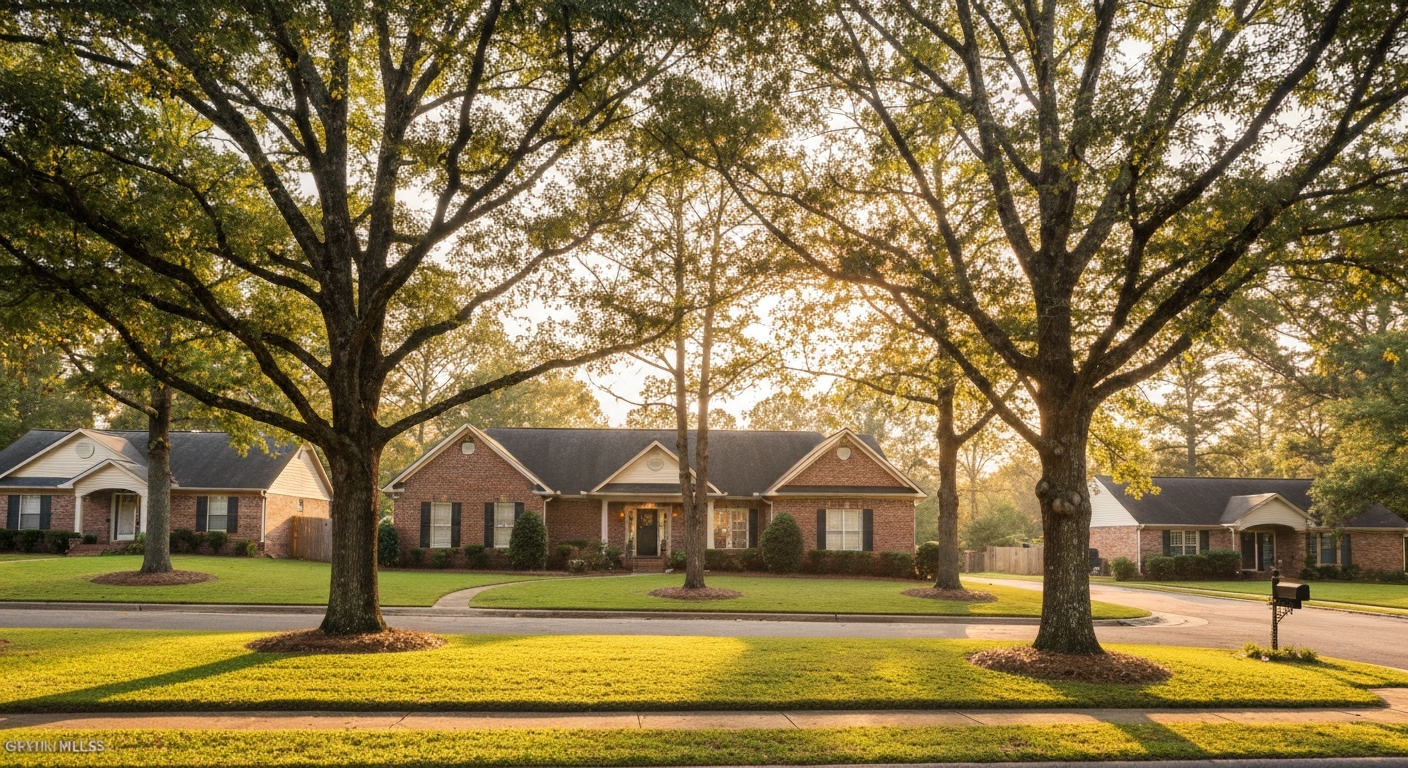
Which CSRA neighborhood offers the best rental investment in 2026? Evans, Grovetown, Martinez, and Augusta city each serve a different investor strategy. Columbia County's 2026 millage rate is 16.234—the lowest in 35 years. Evans averages $1,517/month in rent; Grovetown, $1,690; Martinez, $1,758; Augusta city, $1,349. Gross yields favor Augusta city and Grovetown; tenant stability and lower operating costs favor Evans and Martinez.
You have done the macro work. You know the CSRA is a cash-flowing market with durable demand anchors—Fort Gordon at 31,874 jobs and $7.5 billion in annual economic impact, the Savannah River Site with an average contractor salary of $86,718, Augusta University Medical Center with 12,000 employees. You've calculated that you can buy for a fraction of what coastal markets charge and collect rents that actually cover expenses. We covered the broad demand picture in our four demand anchors overview.
Now comes the harder question: which neighborhood?
The answer matters more than most out-of-state buyers realize. Evans, Grovetown, Martinez, and Augusta city are not interchangeable options on the same menu. They have meaningfully different purchase prices, rent levels, tenant pools, property tax burdens, and risk profiles. Buying the wrong submarket is not a disaster—but it costs you yield, or tenant quality, or both, for years.
Here is the honest comparison.
The CSRA Is Not One Market — It's Four
The Central Savannah River Area spans two states and several distinct counties. For single-family rental investment, four submarkets drive the conversation:
- Evans, GA (ZIP 30809) — premium Columbia County suburb; highest entry prices, most stable long-term tenants
- Grovetown, GA (ZIP 30813) — Fort Gordon corridor; strong BAH alignment, best value-to-rent ratio
- Martinez, GA (ZIP 30907) — established Columbia County community between Evans and Augusta; highest average rents in the metro
- Augusta City / Richmond County — urban core; lower purchase prices, higher gross yields, more management-intensive
All four sit within roughly a 25-mile radius. Fort Gordon's main gate is about 10 minutes from Grovetown, 12 from Martinez, 18 from Evans, and 15 from downtown Augusta. Commute time to Augusta University Medical Center is 8–12 minutes from Martinez, 20–25 from Evans.
Those commute differences shape who rents in each area—and who pays premium rents to do it.
Evans, GA (ZIP 30809): Columbia County's Premium Address
Evans is Columbia County's most desirable suburb. It carries the highest purchase prices in the CSRA—median home values run $371,000 to $475,000 per current Redfin data—and it delivers a corresponding premium on rent quality and tenant stability.
Rent: Average across all unit types is $1,517/month. Three-bedroom single-family rentals typically run $1,700–$2,200/month depending on subdivision, condition, and amenity package. New construction near Evans Town Center commands the top of that range.
Who rents here: A mix of military officers (O-4 and above, whose BAH for the CSRA with dependents can exceed $2,100/month in 2026), Wellstar and AU Med healthcare professionals, Savannah River Site contractors, and Fort Gordon civilian employees. This tenant pool skews toward dual-income households with strong financials—less churn, more care for the property.
Property taxes: Evans sits in Columbia County, where the 2026 millage rate is 16.234—the lowest in 35 years. For a $400,000 Evans rental assessed at 40% of fair market value (Georgia's standard assessment ratio), annual county property taxes run approximately $2,597. That is meaningfully lower than equivalent-value properties in Richmond County.
The tradeoff: Gross yield is the lowest of the four submarkets. A $400,000 Evans home renting for $1,900/month generates a 0.475% monthly rent-to-price ratio—about 5.7% gross annualized. That is not a bad yield for a near-zero-vacancy, premium-tenant market, but it is not what DSCR lenders get excited about. Evans makes the most sense for investors prioritizing principal preservation, low vacancy, and stable long-term appreciation over maximum cash-on-cash return. See our DSCR loan breakdown for CSRA investors for how lenders model this across submarkets.
Grovetown, GA (ZIP 30813): The Fort Gordon Corridor
Grovetown is the CSRA submarket purpose-built for military tenant demand. Fort Gordon's main gate is about 10 minutes away. The housing stock runs from 2000s tract construction to newer communities built after the 2012 Cyber Command expansion, and most 3-BR SFRs are priced well below Evans.
Rent: Grovetown averages $1,690/month across unit types per Zumper's 2026 market data. For 3-BR single-family homes, market rents run $1,500–$1,900/month, with properties near established subdivisions at the top of that range.
Who rents here: E-5 through O-3 active duty and warrant officers make up a substantial portion of the tenant pool. Fort Gordon BAH rates in 2026 put a typical E-7 with dependents at approximately $1,764/month—well within the Grovetown market band. That BAH-to-market alignment is what makes Grovetown reliably occupied: as long as Fort Gordon missions continue, the demand floor holds. We cover BAH rate alignment and rental pricing strategy in more detail in our dedicated post on the subject.
Home values: Median home values in Grovetown run approximately $279,000 per current Redfin data. A $279,000 Grovetown home renting at $1,700/month delivers a 0.609% monthly rent-to-price ratio—roughly 7.3% gross. That is a full 1.5–2 percentage points above Evans on the same calculation.
Fort Gordon demand driver: In June 2026, the Army formally assumed control of Fort Gordon's new Cyber School campus following six years of construction. Augusta Business Daily reports that Fort Gordon's expansion is projected to bring 17,000+ additional personnel by 2028, requiring 26,000+ new housing units region-wide. Grovetown sits directly in the path of that demand growth.
The tradeoff: Military tenants are excellent—federally employed, BAH-funded, and subject to PCS orders that create predictable natural turnover. That PCS cycle (typically every 2–3 years) also means you are screening new tenants more frequently than in a suburban professional market. The Servicemembers Civil Relief Act gives military tenants specific lease termination rights that your property manager must handle correctly. At McBride Property Management, SCRA-compliant lease language is standard in our lease forms.
Martinez, GA (ZIP 30907): The Established Middle Ground
Martinez is the least-discussed of the four submarkets and the most underestimated. It sits between Evans and Augusta city geographically, between Grovetown and Evans price-wise, and—here's what surprises most out-of-state investors—it carries the highest average rents in the metro.
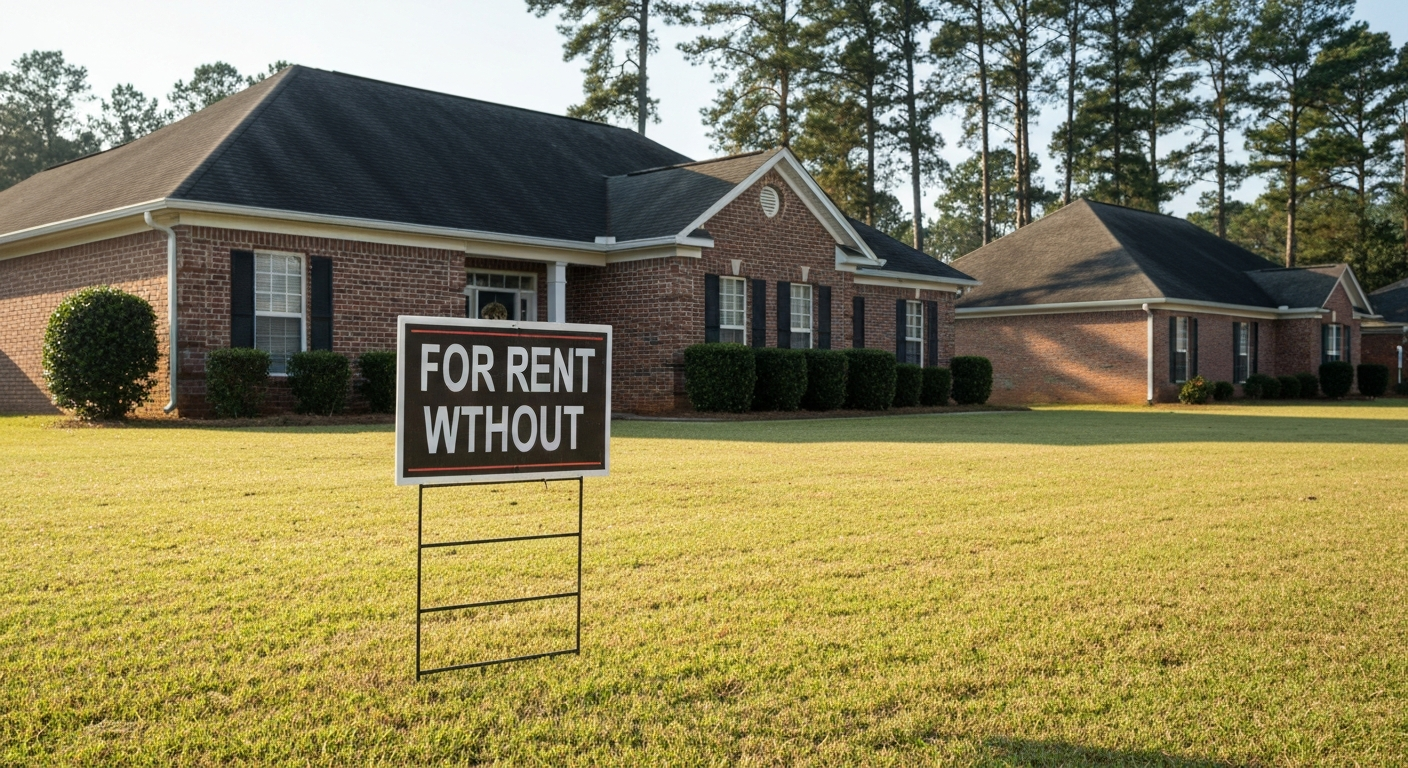
Rent: Martinez averages $1,758/month across unit types. For 3-BR single-family homes, asking rents range from $1,500 to $2,450/month depending heavily on the specific neighborhood within this unincorporated Columbia County community. The upper range reflects Martinez's more established pockets with larger lots, mature trees, and older character that long-term tenants pay up for.
Who rents here: Martinez draws from a different mix than Grovetown: medical professionals at Augusta University Medical Center (about 12 minutes by car), SRS contractors commuting via I-20, and Fort Gordon civilian employees who prefer quiet established neighborhoods over the immediate military corridor. Tenant income profiles tend to be stable, and tenure runs longer than the Grovetown average.
Property taxes: Martinez is unincorporated Columbia County, so the same 16.234 millage rate applies. Typical SFR investment stock in Martinez runs $250,000–$340,000, making the absolute tax burden lighter than Evans while the rent profile is comparable or higher in many pockets.
The tradeoff: Age-of-housing variation matters for capital expenditure planning. A 1980s Martinez home needs closer inspection of HVAC, roof, and plumbing than a 2010s Grovetown build. Before listing any Martinez property, we recommend walking through our pre-rental property prep checklist to identify deferred maintenance that will show up as tenant complaints or mid-lease emergencies if left unaddressed.
Augusta City (Richmond County): The Yield Play
Richmond County is a different calculation entirely. Purchase prices are substantially lower—median home values run $165,000 to $224,900 per Redfin's 2026 housing market data—which produces attractive gross yield numbers. But the operating environment is meaningfully different from Columbia County.
Rent: Augusta city averages $1,349/month across unit types. For a $190,000 acquisition renting at $1,349/month, you get a 0.71% monthly ratio—approximately 8.5% gross, the highest of the four submarkets by this measure.
Property taxes: Richmond County's effective non-homestead property tax rate is substantially higher than Columbia County's 16.234 millage. Investors should contact the Richmond County Tax Commissioner's Office directly for the 2026 non-homestead millage figure and model this carefully before comparing yields across county lines. Do not assume CSRA-wide yield comparisons are apples-to-apples if they ignore this tax differential.
Tenant pool and risk profile: Augusta city's tenant pool is more varied in income and employment stability. Augusta University Medical Center's 12,000 employees are a stabilizing force, particularly for neighborhoods near the AU campus and the Summerville area. But vacancy rates and turnover tend to run higher than Columbia County across the market as a whole, and maintenance costs often track higher.
Safety data: CrimeGrade.org rates Columbia County in the 92nd percentile for safety nationally, with 1.961 violent crimes per 1,000 residents. Richmond County ranks in the 62nd percentile at 3.131 violent crimes per 1,000 residents. This is not a reason to avoid Augusta city entirely—it is a reason to be precise about which neighborhoods and which tenant profiles you will accept, and to have a property manager with strong local knowledge managing the screening.
The verdict: Richmond County suits experienced investors optimizing gross yield who are comfortable with more active management. It is generally not the right first CSRA purchase for an out-of-state buyer who has never operated in the market. Start in Columbia County, learn the market with a property manager who knows it, then consider Richmond County if the yield premium justifies the complexity.

The Numbers Side by Side
| Submarket | Avg Rent (All Units) | 3-BR SFR Range | Median Home Value | Monthly Yield (est.) | 2026 Millage |
|---|---|---|---|---|---|
| Evans (30809) | $1,517 | $1,700–$2,200 | $371K–$475K | ~0.45–0.50% | 16.234 (Columbia Co.) |
| Grovetown (30813) | $1,690 | $1,500–$1,900 | ~$279K | ~0.58–0.68% | 16.234 (Columbia Co.) |
| Martinez (30907) | $1,758 | $1,500–$2,450 | $250K–$340K est. | ~0.58–0.66% | 16.234 (Columbia Co.) |
| Augusta City (RC) | $1,349 | Varies widely | $165K–$225K | ~0.65–0.75% | Richmond Co. (higher) |
Rent data: Apartments.com, Zumper, and current MLS, 2026. Home values: Redfin, 2026. Monthly yield is gross—operating expenses, vacancy, taxes, and management fees reduce realized yield significantly. Martinez home values are estimated from active MLS inventory; median may not be available from aggregators for this unincorporated area. This is general guidance—not investment advice.
The yield column tells part of the story. The rest comes from vacancy rates, tenant turnover costs, maintenance intensity, and property tax burden—all of which favor Columbia County even though the gross numbers look closer than they are.
How to Match Your Strategy to a Submarket
Maximum stability and lowest management intensity: Evans. Accept the lower gross yield in exchange for long tenant tenure, fewer disputes, and a tenant profile that treats the property well. Premium Evans homes rarely sit vacant.
BAH-aligned military demand and better gross yield: Grovetown. The Fort Gordon demand floor is real, the yield is solid, and the SCRA and PCS cycles are manageable with the right lease and property manager. Our owner FAQs page addresses the most common questions about military lease structures.
Balance of yield and stability, targeting medical and professional tenants: Martinez. Higher average rents, Columbia County's favorable tax rate, and a tenant pool with stable employment and longer average lease tenure.
Experienced investor optimizing gross yield, willing to manage more actively: Augusta city. Model your Richmond County taxes carefully, be specific about which neighborhoods and tenant profiles you will target, and have a property manager with deep local vacancy monitoring and screening experience.
Most out-of-state investors who contact McBride Property Management are best served starting in Grovetown or Martinez. We can reach market-rate rent quickly, tenant quality is predictable, and the Columbia County operating environment is favorable. Our free rental analysis gives you a property-specific rent opinion before you make any offer.
What 2026's Development Pipeline Is Telling You
Three infrastructure events in 2026 deserve specific attention for rental investors considering any CSRA submarket:
Wellstar Hospital, Columbia County. A new Wellstar health system campus opened in April 2026, bringing over 1,200 healthcare jobs to the Evans and Martinez corridor. Clinical professionals who relocate for hospital positions tend to stay for years—exactly the tenant profile that drives long-term, low-turnover demand for suburban rentals. This is a structural demand addition to Columbia County, not a one-time event.
Fury's Ferry Road Widening. Planned for fall 2026, this expansion adds lanes along the corridor connecting Evans and Martinez to downtown Augusta and the medical center. Reduced commute friction between Evans and the AU Medical campus benefits both the tenant pool and long-term property values. Martinez in particular sits well-positioned to capture the expanded professional workforce commuting to Augusta.
Fort Gordon Cyber School Campus. In June 2026, the Army formally assumed control of the newly completed Cyber School campus after six years of construction. This represents a permanent institutional commitment to the installation's national cyber operations mission. Augusta Business Daily projects that the resulting personnel growth through 2028 will require 26,000+ new housing units region-wide. That is not speculative demand—it is funded federal mission growth with a housing demand floor attached.
For investors considering a 7–10 year hold in any CSRA submarket, these three catalysts collectively reduce the demand uncertainty that makes out-of-state investment feel risky.
The HB 399 Requirement Applies No Matter Which Submarket You Choose
Before you close on any CSRA property, one compliance fact applies universally: Georgia HB 399, effective July 1, 2025, requires out-of-state owners of single-family homes and duplexes to employ at least one Georgia-licensed property manager or maintain a Georgia-based employee handling tenant communications. This requirement applies in Columbia County and Richmond County alike, for every submarket on this list.
Non-compliant out-of-state landlords face legal exposure under O.C.G.A. § 44-7-25. Most out-of-state investors who sign a management agreement with McBride Property Management satisfy the HB 399 requirement on the day they onboard—the management agreement covers the statutory requirement automatically.
Amber McBride, our Operations Manager, handles the onboarding process for new out-of-state owners. She coordinates the initial lease-up, sets up the owner's portal in AppFolio, and schedules the first property inspection cycle. Most owners are fully operational within 30 days of signing the management agreement. This is general guidance from a property manager—not legal advice; consult a Georgia attorney for your situation.
Your Pre-Offer Checklist for Any CSRA Submarket
Out-of-state investors consistently get better outcomes when they do this work before going under contract:
Get a market rent opinion from your property manager, not just your agent. Your buyer's agent wants the deal to close. Your property manager lives with rental rate data daily and can tell you whether $1,800/month is realistic for that specific street, condition, and layout—not just the ZIP code average.
Run the full operating expense model. Our Operating Expenses Worksheet lays out CSRA-specific benchmarks for maintenance reserves, vacancy, management fees, insurance, and taxes. Fill it out for every property before you make an offer.
Check HOA status. Many Columbia County subdivisions have HOAs with rental restrictions, investor caps, or tenant approval requirements. This can kill deals post-inspection if you find it late.
Order a thorough inspection. In older parts of Martinez and Augusta city especially, ask your inspector to specifically assess HVAC age, roof condition, and any evidence of foundation movement or moisture intrusion. These are the biggest capital expenditure items that surprise out-of-state buyers. Our full landlord due diligence framework is in the CSRA Landlord Field Guide.
Review the specific street, not just the ZIP. Even within a single submarket, block-level conditions vary. Street View is imperfect but tells you more than listing photos. A local property manager who has physically driven the neighborhood is better than either.
The CSRA is a genuinely compelling rental market. The demand anchors are real and funded, not speculative. The yields—adjusted for actual operating costs rather than gross calculation—beat most comparable Sun Belt markets at current entry prices. But the difference between a good outcome and a great one usually comes down to the pre-purchase work that out-of-state investors skip when buying from a distance.
Not sure which CSRA neighborhood fits your investment strategy?
McBride Property Management manages rentals across Evans, Grovetown, Martinez, and Augusta city. Before you go under contract on any CSRA property, our team can provide a property-specific rent opinion and walk you through the operating expense model for that exact address. There is no charge for the analysis—it is part of how we earn the relationship.
Request a free rental analysis → or download the CSRA Landlord Field Guide to start your due diligence today.
Call (706) 339-2874 to speak with our team directly.
Noah McBride, Broker McBride Property Management 706.339.2874 Guiding you home.
Ready to Talk Property Management?
McBride Property Management handles the details while you enjoy the returns.
Talk to our team about your property