Managing Your CSRA Rental Remotely After Fort Gordon PCS
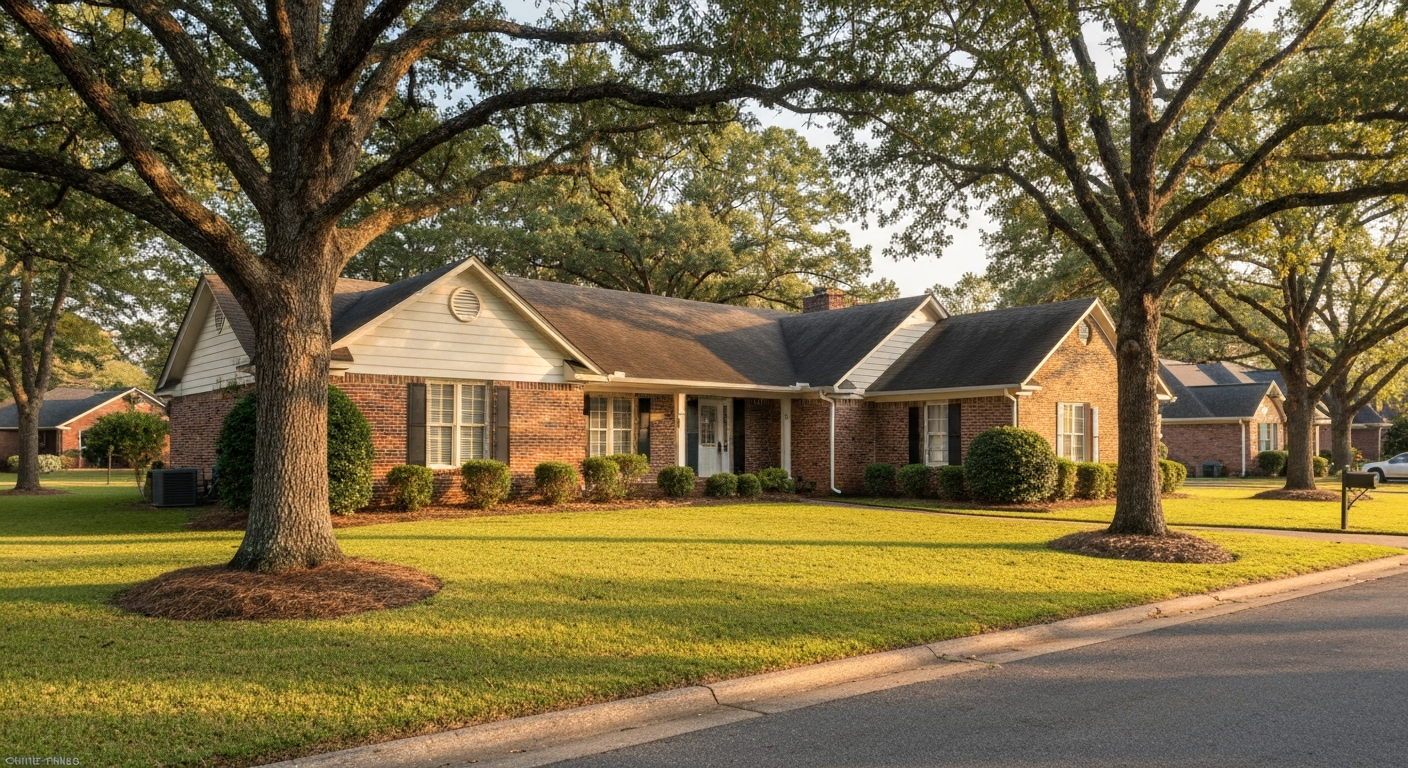
How do you manage a CSRA rental when you're stationed hundreds or thousands of miles away? Set a pre-authorized repair threshold before you leave, build a monthly statement review habit, schedule an annual written inspection, and track your Section 121 clock every year. The mechanical work is lighter than most military landlords expect—but the calendar discipline is not optional.
You're settled at your new duty station—Fort Bragg, Joint Base Lewis-McChord, Camp Humphreys, wherever the Army sent you next. Your Evans or Grovetown rental is occupied. Your property manager sent the first check. And for the next 18–36 months, you're a landlord who can't drop by.
Most military owners handle the pre-departure work well. The 60-day timeline before a PCS move—the insurance switch, the PM onboarding, the rent pricing—that's a checklist problem, and service members are good at checklists. The harder problem is the 34 months that follow, when there's no ceremony, no deadline, and no one reminding you to stay on top of an investment that's generating income half a country or an ocean away.
This post is the operating manual for that stretch. It covers what to do monthly, quarterly, and annually as a remote CSRA landlord—plus the two financial and legal threads that require attention every year regardless of what else is happening: the Georgia income tax question and the Section 121 clock.
Why Fort Gordon Rentals Are Worth the Ongoing Management Effort
Before getting into the mechanics, it's worth grounding this in the market fundamentals—because those fundamentals changed materially in the last 60 days.
On June 2, 2026, Fort Gordon took official control of its new Cyber School campus after six years of construction. The new facility, valued at $934 million as part of the Cyber Center of Excellence, represents the largest active military construction program in the continental United States. Approximately 20,000 signal and cyber soldiers train at Fort Gordon every year—and that throughput is now operating through a purpose-built, generation-defining campus.
Greater Augusta was also named a 2026 Great American Defense Community of Excellence by the Association of Defense Communities, reflecting the concentration of cyber, intelligence, and national security capabilities anchored to Fort Gordon. That designation is a meaningful indicator of long-term installation stability.
You may have seen news about the hospital. Eisenhower Army Medical Center is being transitioned from a full inpatient facility to an ambulatory care center. That's real, and military families moving to Fort Gordon will shift to Wellstar Augusta University Medical Center and other CSRA civilian health systems for inpatient care. It matters—but it hasn't moved the rental demand needle. Evans and Grovetown remain the CSRA's tightest rental submarkets by absorption rate, and properly priced single-family homes in those corridors are still re-leasing in 15–25 days during the summer season.
Your investment is in the right place. The question is how to manage it properly from wherever you are now.
Month One at Your New Station: Build the Infrastructure Before Anything Else
The 30 days immediately after your household goods arrive are the best window to set up the systems you'll rely on for the entire tour. If you miss this window, you'll spend the next two years reacting instead of managing.
Dedicated bank account. Open a separate checking account for rental income and disbursements if you haven't already. Mixing rental proceeds with your personal pay complicates your Schedule E, creates headaches if you're ever audited, and makes it harder to track true cash flow. Most remote landlords use a bank with a strong mobile app since you'll be managing on a phone across time zones.
Pre-authorized repair threshold. Put in writing to your PM the dollar amount below which they can authorize and execute repairs without calling you first. For most CSRA single-family rentals, $300–$500 is a reasonable line. Anything below that gets handled; anything above requires your email or text sign-off. This one step prevents the two most common remote-landlord failure modes: being called for every $75 drip repair, and being surprised by a $3,000 HVAC charge on the quarterly statement.
Communication protocol. Email is the record; text is the alert. Tell your PM which channel to use for which type of situation. A burst pipe or HVAC failure in August should hit your phone immediately. A monthly statement can go email-only. Emergency contact instructions—who to reach if you're unreachable, and what decisions that person can authorize—should be in writing before you cross the Atlantic.
Emergency contact chain. If you're deploying to a theater with limited connectivity, designate a stateside POC—a spouse, sibling, or trusted family member—who can make time-sensitive decisions on your behalf above a specified dollar threshold. Give your PM that contact. This protects your tenant and your property from a simple maintenance decision becoming a habitability violation because no one could reach you for 72 hours.

Reading Your Monthly Statement Like a Landlord, Not Just a Depositor
Your PM should send a monthly statement. Most do. Most remote landlords glance at the deposit line and close the email—which means they're getting the cash but not the information.
A well-structured monthly statement shows:
| Line Item | What to Check |
|---|---|
| Gross rent received | Should match your lease rate; flag if short or absent |
| Management fee | Should match your contract percentage (typically 8–10% in the CSRA) |
| Maintenance charges | Each should correspond to a specific work order |
| Owner disbursement | Your net; should arrive within 10 business days of month-end |
| Reserve balance (if held) | Your maintenance reserve float, if your PM holds one |
The maintenance section is where problems surface early or late. If you're reviewing it monthly, a $150 drain cleaning is a routine event. If you first notice it 11 months later at the annual inspection summary, it's the early warning you missed for a larger plumbing issue that's now a $2,800 line item.
Ask your PM—if they don't do it automatically—to attach the corresponding work order or invoice for any maintenance charge over $50. This is not an unusual request. It's standard practice for any accountable property management operation, and it's how McBride PM structures our owner reporting through the AppFolio owner portal. If your current PM can't or won't do this, that's relevant information.
The Annual Inspection: Your Eyes When You Can't Be There
A written property inspection, conducted by your PM with timestamped photographs, is the most important single document in your remote landlord calendar. Nothing else tells you what the property actually looks like.
The right timing is month 10 or 11 of each lease year—late enough to have a full picture of how the tenant has treated the property, early enough to address any findings before lease renewal decisions are made. Use our Annual Property Inspection checklist as the benchmark for what the report should cover.
When the inspection report arrives, these are the questions to answer before you close the document:
- Is the HVAC filter current? When was the system last serviced?
- Is there any evidence of moisture intrusion—at windows, the roofline, or in the crawl space?
- Are appliances functioning? (Document serial numbers against the initial lease inventory)
- Are smoke and carbon monoxide detectors installed and working? Georgia law under O.C.G.A. § 25-2-40.1 requires working detectors, and the landlord is responsible for ensuring they're in place at the start of each tenancy
- Is the exterior—paint, roof, gutters, downspouts—in serviceable condition?
- Are there any signs of unauthorized pets, subletting, or damage beyond normal wear?
If the report surfaces something that needs attention, address it before renewal—not after the tenant gives notice and you're sorting a contractor bid from a packing list at your next duty station.
Making Major Repair Decisions from 6,000 Miles Away
Even with a pre-authorized threshold, there will be repair decisions above your limit that require your call. An HVAC compressor in the CSRA runs $2,500–$4,500 depending on system size and current contractor availability. A water heater replacement is $900–$1,500. A partial roof repair can run from a $300 flashing fix to $6,000+ depending on extent.
For any of these, a good PM sends you: (1) the problem description, (2) at least one licensed contractor quote, and (3) a recommendation. Your job is to respond within 48 hours—not because your PM can't hold the line, but because a cooling failure in a Georgia summer is an emergency under the Georgia Safe at Home Act's duty to maintain habitability, and delay creates both legal exposure and a bad tenant experience that ripples into retention.
A practical decision framework for remote repairs:
- Under $500: Pre-authorized. Your PM executes. You review on the monthly statement and verify the work order.
- $500–$2,000: PM sends quote and recommendation. You respond within 24–48 hours via email or text.
- Over $2,000: PM presents multiple quotes when possible. Brief phone call—even five minutes—before you authorize.
- Emergency (loss of HVAC, running water, or heat): PM handles immediately and notifies you within the hour. You review after the fact. Don't make your tenant sit through an August night without AC in Augusta while you're tracking down a signal.
For capital expenditures—full roof replacement, HVAC system, major flooring—those are planned conversations, not reactive ones. They belong in your annual planning discussion with your PM, ideally in Q4 each year. Our Operating Expenses Worksheet gives you CSRA-calibrated benchmarks for projecting when these will hit and what they'll cost against your rental income.
Lease Renewal from a Distance: The 90-Day Decision Window
Your PM should initiate the lease renewal conversation with you at least 90 days before the lease end date. If they don't, ask for it. The 90-day window gives you time to think, not just react.
In that window, you need four things:
- Your tenant's payment history for the lease year (the monthly statements you've been reviewing should make this easy)
- A current rent-comp analysis for comparable properties in Evans or Grovetown
- Your repair and maintenance summary for the year (what did this tenancy actually cost you?)
- A decision on renewal terms—hold flat, increase, or increase incrementally
If your tenant is a military family from Fort Gordon, BAH alignment remains the right anchor for your pricing decision. For 2026, Fort Gordon BAH rates rose 4.2%—useful context for how much room you have to increase rent without pushing a quality military tenant toward a competing listing. Military tenants who pay via BAH allotment are among the most reliable payors in the CSRA market; pricing them out to chase a higher rate often costs more in turnover than it gains in rent.
If the tenant is not renewing, your PM should begin re-marketing immediately on notice. A properly priced Evans or Grovetown single-family home typically re-leases in 15–25 days during summer leasing season. Winter re-leasing takes longer. Know which season your lease end is headed into.
One legal note: Under Georgia's Safe at Home Act, a 60-day written notice requirement applies to rent increases for month-to-month tenants. If you're raising rent on a fixed-term lease renewal, the timing notice runs differently—check with your PM or a Georgia real estate attorney on the specifics.
Georgia Income Taxes on Your Rental While You're Stationed Elsewhere
This section is general guidance from a property manager—not legal or tax advice. Talk to a CPA familiar with military taxation and Georgia law for your specific situation.
The short version: Georgia taxes its residents on income from all sources, regardless of where they're currently stationed. If Georgia is your state of legal residency—your home of record—and you're receiving rental income from a CSRA property, that income goes on your Georgia return. Full stop.
This surprises some military landlords who assumed that being stationed in Virginia or Korea somehow changes their Georgia tax relationship. It doesn't. Active duty military pay has its own treatment for service members stationed outside their home state, but rental income is a separate income category. Georgia's official military benefits guide covers what's excluded; rental income from in-state property is not among them.
Georgia's flat income tax rate phases to 5.49% in 2026. On top of federal ordinary income tax on net rental income (which flows through Schedule E), this is a meaningful number. It's also why deductions matter: depreciation, mortgage interest, management fees, insurance, and verified maintenance expenses all reduce your taxable rental income. If you're not working with a CPA who handles both rental real estate and military tax situations, year one after your first PCS is the time to find one.
One bright note for eventually-transitioning service members: beginning in 2026, Georgia retirees of any age may receive the full $65,000 exemption on military retirement pay. That doesn't affect rental income—keep the categories clear—but it's relevant context if your exit timeline is approaching.
Tracking the Section 121 Clock: What Every Military Landlord Owes Themselves Annually
If you sold your Evans or Grovetown home today without ever having rented it, you might qualify to exclude up to $250,000 ($500,000 if married filing jointly) of capital gains under Section 121 of the tax code—provided you've used it as a primary residence for at least 2 of the 5 years before sale.
When you PCS and start renting, the math gets more complicated—but the military exception to Section 121 is there specifically for you. It lets qualifying PCS landlords suspend the 5-year look-back period for up to 10 years while on qualifying extended duty at a location more than 50 miles from the home. The result: a military landlord who rented their home for 8 years while PCS'd across multiple installations can potentially still qualify for the full exclusion when they sell.
The suspension is not something you file for annually—but the facts underlying it need to be preserved. Keep your PCS orders, active duty dates, and home of record documentation organized. When you eventually sell, your CPA will need those records to support the military exception. It's not a complicated analysis, but it requires documentation that's easy to lose across a decade of PCS moves.
For the dollar-value math—what this exclusion is worth on a CSRA home that's appreciated since you bought it—our Section 121 military exception post walks through several specific scenarios.
One wrinkle that catches landlords off guard: when you eventually sell a property you've depreciated, the IRS requires you to recapture those deductions as ordinary income—regardless of whether you qualify for Section 121. Our post on depreciation recapture explains exactly how Georgia landlords calculate what they owe when a rental goes to sale.
When to Hold, When to Sell, and How to Frame the Next PCS Decision
Each PCS cycle is a natural decision checkpoint: move back in, continue renting, or sell. There's no universal right answer, but here's the framework.
Move back in. Resets your Section 121 primary residence clock. Makes sense if Fort Gordon is your likely terminal assignment, if you have strong ties to the CSRA, or if moving back in positions you to sell with maximum exclusion in a few years. Requires sufficient notice to your tenant—work with your PM on the timing, and understand that Georgia notice requirements apply.
Continue renting. Makes sense if the property is cash-flowing, the equity is growing, and the management relationship is working. Use each lease renewal as a financial check: is the rent-to-expense ratio still at a point where holding beats deploying that equity elsewhere?
Sell. Before you decide to sell, run these numbers with your CPA: adjusted cost basis (original purchase price + improvements − depreciation taken), projected sale price, which exclusion you qualify for under Section 121, and what depreciation recapture will cost you at the federal and Georgia state level. A decision that looks clean on the surface—"we'll sell and pocket the gain"—often has $15,000–$30,000 of tax mechanics that should inform the timing.
The one thing that helps every military landlord across all three paths: start the conversation 12 months before the expected PCS. Last-minute decisions under time pressure, in a market you haven't tracked, rarely produce the outcome you want. Your PM, your CPA, and your attorney each need lead time to help you execute well.
Managing a CSRA rental from a distance works—when the PM relationship is built for it.
McBride PM works specifically with Fort Gordon military owners managing their Evans or Grovetown rental from another duty station or overseas. We provide monthly statements with attached work orders, written annual inspections, a 24/7 emergency maintenance line, and the kind of communication cadence that actually works across time zones.
Download our PCS Landlord Quick-Start Guide — it covers the pre-departure checklist and the communication setup our remote owners use from day one. Or request a free rental analysis to talk through your property's current situation. Call us at (706) 339-2874 — we know the military timeline, and we work around it.
Noah McBride, Broker McBride Property Management 706.339.2874 Guiding you home.
Ready to Talk Property Management?
McBride Property Management handles the details while you enjoy the returns.
Talk to our team about your property