Mold in Your CSRA Rental Property: What Georgia Law Requires
Who is responsible for mold in a Georgia rental property? Under O.C.G.A. § 44-7-13, as amended by Georgia's Safe at Home Act (HB 404, effective July 1, 2024), landlords must maintain habitable premises — which includes repairing leaks, water damage, and ventilation failures that cause mold. Mold caused by deferred maintenance is a landlord obligation. Mold caused by a tenant's own behavior — blocking vents, failing to report a known leak for months — may not be.
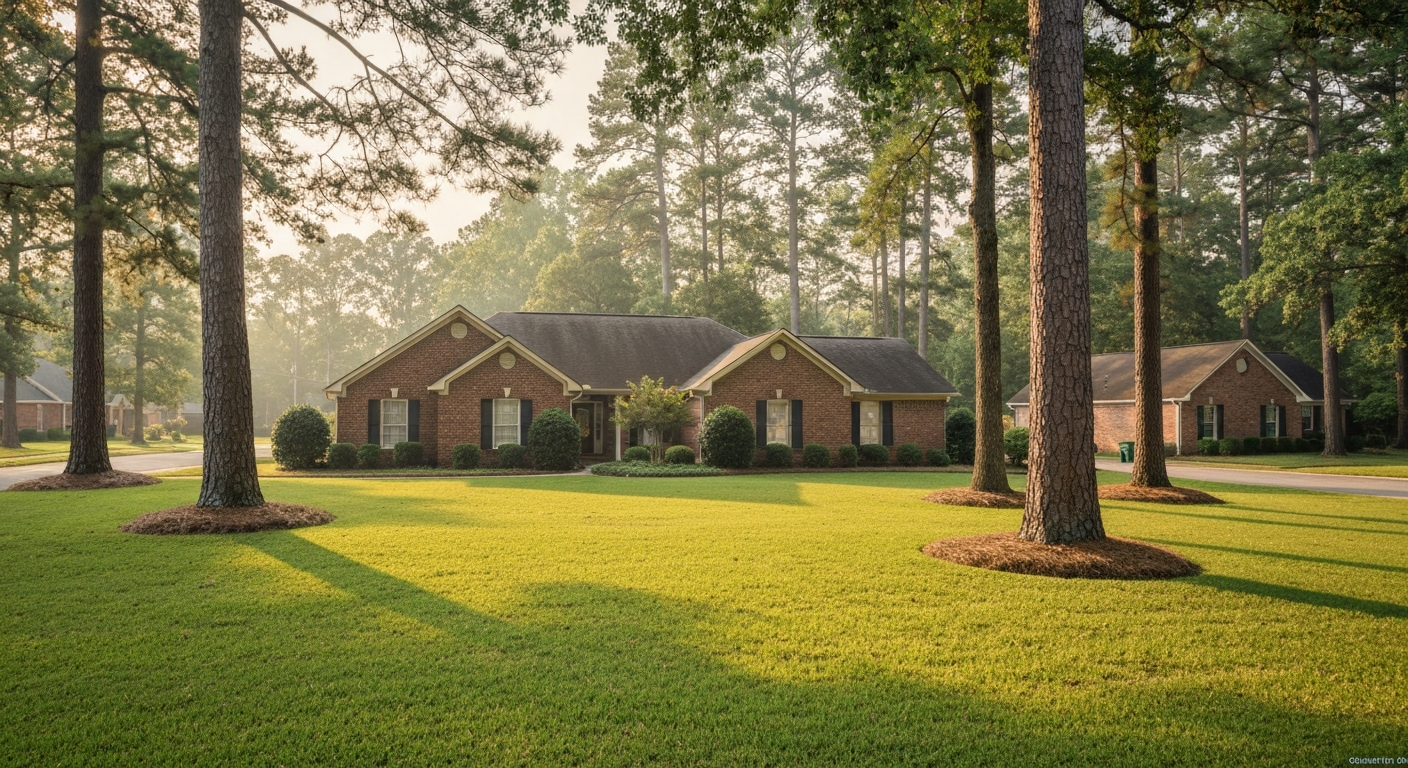
Augusta summers are not polite about moisture. When ambient humidity runs above 80% for weeks at a stretch and a tenant sets the thermostat to 78°F to cut the power bill, the interior walls of your Evans brick ranch can hit dew point overnight. By the time you see discoloration around a window frame or smell something musty in a closet, the mold has already been growing for days or weeks.
For CSRA landlords — whether you own one rental or five, whether you live five minutes from the property or you're managing it from a duty station in Virginia — mold is the liability that hides until it's expensive. Georgia's Safe at Home Act changed the legal landscape in 2024, and that change matters: landlords now carry an explicit statutory duty of habitability that covers mold caused by landlord-controlled conditions.
This guide covers what the law requires, how Augusta's climate creates risks that most landlords underestimate, where landlord responsibility ends and tenant responsibility begins, and what a prevention protocol that actually holds up looks like.
What Georgia's Safe at Home Act Requires for Mold
Georgia's Safe at Home Act — House Bill 404, effective July 1, 2024 — amended O.C.G.A. § 44-7-13 to establish an express, affirmative duty of habitability for residential landlords. Before the Act, Georgia's habitability obligations existed primarily in case law and lease terms. Now they're codified.
Under the amended statute, landlords must maintain residential premises in a condition that does not materially endanger the health and safety of the occupants. The law specifically addresses:
- Water intrusion and moisture damage
- Structural defects that allow water entry
- Plumbing and roof leaks
- Inadequate ventilation
Mold isn't named explicitly in the statute's text, but the connection is direct: mold caused by any of those conditions becomes a landlord habitability problem when the underlying defects go unrepaired. If your roof leaks and you don't fix it within a reasonable time, and mold grows in the ceiling cavity, that's a Safe at Home Act violation — not a tenant issue.
The Act also established a formal notice-and-cure framework. A tenant who believes the premises are uninhabitable must provide written notice to the landlord specifying the condition. The landlord then has a reasonable time to remediate. If the landlord fails to act, the tenant may pursue remedies under Georgia law, up to and including lease termination.
"Reasonable time" is not defined in the statute — the severity of the condition determines it in practice. Black mold spreading across a bathroom wall is not a 30-day problem. A slow mold stain forming in a corner closet is a different conversation than visible mold in an occupied living area with spore counts that make breathing uncomfortable.
This is general guidance from a property manager — not legal or tax advice. Talk to a Georgia attorney for your specific situation.
The full text of O.C.G.A. § 44-7-13 as amended is available through the Georgia General Assembly's official code. Nolo's overview of Georgia rules regarding mold in rental properties provides a useful lay summary of how these statutes apply in practice.
For a full overview of what the Safe at Home Act changed for Augusta-area landlords beyond mold, see our Georgia Safe at Home Act landlord guide.
The Augusta Climate Difference: Why Mold Risk Is Higher Here
Augusta sits in a humid subtropical climate zone — the kind where July dew points regularly reach 70°F or above and overnight temperatures in summer rarely drop below 72°F. That matters because mold needs two things to grow: organic material (wood, drywall paper, dust) and moisture. The Augusta summer supplies the second condition in abundance and for an extended period.
The three failure points that show up most often in CSRA rentals:
Crawl spaces. Most of Columbia County's housing stock was built between the 1970s and early 2000s, and many of those homes have vented crawl spaces. In Augusta's climate, vented crawl spaces routinely accumulate moisture in summer because warm humid outside air enters the vents, hits the cooler ground and floor joists, and condenses. Mold on floor joists in a vented crawl space is not unusual — and it's almost always a landlord-origin condition, not a tenant one. Converting a vented crawl space to a sealed, conditioned crawl space is a one-time capital expense that eliminates this failure mode permanently.
HVAC condensate drain lines. An air conditioning system running 12–16 hours a day in a Georgia summer produces substantial condensate water. A clogged drain line — caused by algae and mineral buildup — can back the condensate pan up into the air handler closet, depositing water continuously against drywall and subfloor. This is a $150–$300 annual maintenance fix (a simple flush of the drain line, done each spring) that becomes a $2,000–$5,000 problem if ignored through a full summer.
Slab-edge and foundation moisture intrusion. A significant share of CSRA rentals are single-story brick homes built on concrete slabs or minimal crawl space clearance. When a slow plumbing leak, French drain failure, or grading problem sends water toward the foundation, moisture can penetrate the slab/wall interface and start growing mold behind the baseboard. These situations are invisible from a casual walkthrough and only show up in a proper annual inspection.
Landlord vs. Tenant Responsibility: Where the Line Falls
Not every mold situation is the landlord's problem. Georgia law and common sense draw a workable line — but that line only holds up if you have documentation to back it.
Conditions that create landlord liability:
| Condition | Why It's a Landlord Issue |
|---|---|
| Roof leak | Structural maintenance is explicitly a landlord duty under O.C.G.A. § 44-7-13 |
| Plumbing leak (supply line, drain, water heater) | Same |
| HVAC condensate drain failure | Landlord equipment; tenant has no access to service it |
| Crawl space moisture intrusion | Structural; tenant has no reasonable access |
| Inadequate bathroom ventilation (broken or missing exhaust fan) | Landlord's responsibility to provide functional exhaust |
| Window seal failure allowing rain intrusion | Structural |
| HVAC mold (mold in ductwork or air handler) | Landlord equipment; affects air quality throughout the unit |
Conditions that may shift responsibility to the tenant:
| Condition | Why It May Be a Tenant Issue |
|---|---|
| Running a humidifier 24/7 in a closed room | Tenant behavior, not equipment failure |
| Blocking vents or closing off rooms from HVAC | Tenant behavior that defeats the ventilation system |
| Leaving windows open during rain consistently | Tenant behavior |
| Failing to report a known leak for weeks or months | Tenant's duty to notify under O.C.G.A. § 44-7-14 |
| Cosmetic surface mold in bathroom grout from poor cleaning habits | Tenant housekeeping |
The phrase "tenant's duty to notify" matters. O.C.G.A. § 44-7-14 establishes that tenants are obligated to inform the landlord of conditions requiring repair. If a tenant knew about a slow drip under the bathroom sink and didn't report it for two months, the resulting mold damage can reasonably be attributed to the tenant's failure to notify — which affects your security deposit deduction rights and your potential liability exposure.
Your lease language and move-in documentation are what make this distinction enforceable in practice. Without a move-in inspection report that documents the condition of every surface and fixture, you have no baseline to work from when a mold dispute arises. The McBride PM annual property inspection form provides the documentation structure to establish that baseline at move-in and at every subsequent inspection.
For how security deposit deductions work in Georgia when mold damage is tenant-caused, see our detailed breakdown on deposit law.

What the EPA Says: Thresholds and Response Timelines
No federal statute specifically governs mold in residential rentals — that's a state and local regulatory space. But the EPA's published guidance has become the de facto industry standard that courts, insurance adjusters, and plaintiff's attorneys reference when a mold situation escalates into a claim.
The key thresholds from the EPA's A Brief Guide to Mold, Moisture and Your Home:
The 10 square foot threshold. Mold patches covering less than 10 square feet — roughly a 3×3 area — can often be cleaned by the property owner using appropriate protective equipment (N-95 mask, goggles, gloves) and an EPA-registered antimicrobial cleaner. Anything larger should be assessed and handled by a certified mold remediation contractor. The assessment piece matters: a larger surface mold patch is often the visible portion of a larger subsurface problem in wall cavities.
The 24–48 hour window. Water-damaged materials that dry completely within 24–48 hours typically don't produce mold colonization. Once that window closes and damp materials remain wet, mold can begin establishing itself within another 24–48 hours under Augusta summer temperature and humidity conditions. The response timeline matters: every day a leak continues after you know about it extends your legal exposure under the Safe at Home Act.
HVAC is a special case. Any mold in or near an HVAC system requires professional handling, regardless of the size of the visible patch. Mold in the air handler or ductwork gets distributed throughout the entire living space every time the system runs — which in an Augusta summer means 12+ hours daily. The HUD Healthy Homes program identifies HVAC as one of the highest-risk mold transmission vectors in residential properties because of exactly this distribution mechanism.
These thresholds are not just best-practice recommendations — they define the standard of care that determines whether a landlord acted reasonably when a mold situation reaches a magistrate court or becomes a habitability complaint under the Safe at Home Act.
A Prevention Protocol That Holds Up
The most cost-effective mold management strategy is the one that prevents mold from forming in the first place. Here's the prevention protocol McBride PM applies to properties across the CSRA.
Annual pre-summer checks (target: late April or early May):
- Inspect crawl space for standing moisture, failed vapor barrier, signs of wood staining or rot
- Flush the HVAC condensate drain line (a simple pour of distilled vinegar or a shop-vac pull from the exterior drain port prevents most clogs)
- Check the roof for missing or lifted shingles, deteriorated flashing at pipe penetrations and valleys
- Test all bathroom exhaust fans — run them and hold a sheet of toilet tissue to the vent cover; it should hold against the grille
- Inspect window seals and weatherstripping for gaps, cracking, or visible daylight
- Confirm attic has functional cross-ventilation — ridge vents clear, soffit vents unblocked by insulation
- Walk the exterior grading: water should drain away from the foundation on all sides; any area that pools against the foundation needs correction before heavy summer rain
At every lease renewal and tenant turnover:
- Inspect all caulk and grout lines in bathrooms and kitchen backsplash; regrout or recaulk any cracked or missing areas
- Run water under every sink and check supply line connections and drain p-traps for slow drips
- Inspect the water heater pan for standing rust or mineral deposits (early sign of a slow pressure relief seep)
- Document the condition of all surfaces with timestamped photos stored in the property file
In your lease:
- Require tenants to maintain indoor temperature no higher than 78°F when the unit is occupied during the months of May through October (this protects HVAC efficiency and directly reduces interior condensation risk)
- Require tenants to report water leaks, standing water, or visible mold in writing within 24 hours of discovery
- Specify that bathroom exhaust fans must be run during and for 15 minutes after every shower
- Include a clause stating that tenant-caused mold (from behavior enumerated above) is the tenant's financial responsibility, subject to the security deposit and any additional claim
The lease language paired with a summer maintenance checklist for HVAC servicing and exterior weatherproofing gives you a complete seasonal maintenance record that demonstrates ongoing diligence.
What Remediation Costs in Augusta — and When Insurance Pays
If prevention fails, here is what professional mold remediation typically costs in the Augusta market in 2026:
Contained single-room situation (one bathroom, closet, or single wall section): $500–$1,500. Involves surface cleaning, possible drywall cut-and-patch, and HEPA air scrubbing. A licensed remediation contractor should issue a clearance letter after completion.
Crawl space mold on floor joists: $1,200–$4,000 depending on square footage affected. Involves mechanical cleaning of joists, application of an antimicrobial encapsulant, and addressing the underlying moisture source — typically a vapor barrier replacement or drainage correction.
Systemic mold involving HVAC ductwork or air handler: $3,000–$10,000 or more. This is the worst-case scenario and requires duct cleaning or replacement, HEPA treatment of the air handler, and often temporary tenant relocation while work is in progress.
Does your landlord insurance cover this? The answer depends on cause. Mold caused by a sudden, accidental event — a burst supply line, an HVAC condensate pan that fails overnight — is generally covered under a standard landlord policy's water damage provision. Mold caused by a gradual leak or deferred maintenance is typically excluded under a "long-term seepage" carve-out.
This distinction is why your inspection records and maintenance logs matter beyond the legal liability argument: they also determine how an insurance adjuster characterizes the claim. A property that has documented annual inspections and a repair log is a very different claim than a property with no maintenance history. See our Georgia landlord insurance guide for a full breakdown of coverage types and what Augusta-area policies commonly include and exclude.
The Documentation Trail That Protects You
When a mold dispute escalates — whether a tenant invoking the Safe at Home Act or a personal injury claim from an occupant — what protects you is not the absence of mold but the presence of documentation showing reasonable and timely action.
Move-in inspection report. A signed document with dated photos of every room surface, fixture, window frame, bathroom, and mechanical area at the start of tenancy. This establishes the property's baseline condition. If mold appears six months into a tenancy, the move-in report lets you demonstrate it was not present at lease execution.
Maintenance request logs with timestamps. Every tenant communication about leaks, moisture, or musty smells must be documented with a timestamp. AppFolio, which we use to manage all McBride PM properties, timestamps every maintenance request automatically — creating a record that shows when the landlord was notified and when the response was dispatched. If you're self-managing, responding to maintenance calls by text or email rather than by phone call creates the same paper trail. A verbal report with no written follow-up leaves you with no record.
Vendor work orders and invoices. When you dispatch a plumber, HVAC tech, or roofer, keep every invoice that documents what was found and what was done. This is your evidence of timely and competent response. The invoice's date relative to the date of the maintenance request is the measure of how reasonable your response time was.
Clearance reports after remediation. After any professional mold remediation job, require the contractor to issue a clearance letter stating that the affected area has been treated and meets acceptable indoor air quality standards. This document goes in the property file and can be produced in any future dispute.
Annual inspection records. An annual walk-through inspection with photographs creates an ongoing health record for the property that shows pattern, not just a snapshot. If a mold problem develops and you have three consecutive years of inspection records showing a dry, well-maintained crawl space, that history speaks for itself in a dispute. Without it, the conversation defaults to he-said/she-said.
This documentation structure is standard practice at McBride Property Management. When you hand a property to us to manage, we build this file from day one — maintenance logs, inspection photos, vendor invoices, clearance reports — and you can review it anytime through the AppFolio owner portal. For out-of-state owners in particular, this documentation framework is the substitute for physical presence. You cannot walk through an Evans rental quarterly when you're stationed in Colorado. But you can require your property manager to send you timestamped inspection photos twice a year and maintain searchable maintenance records.
Our CSRA Landlord Field Guide covers the full preventive maintenance framework — crawl space, HVAC, exterior envelope, and lease language — organized for the property owner who wants a single reference document. Download it from our resources page.
See also our tenant turnover make-ready checklist for the complete sequence of what to document and address between tenants — including a mold inspection step at every turnover.
Is your CSRA rental protected before mold season peaks?
McBride Property Management conducts documented annual inspections, tracks every maintenance request with timestamped logs through AppFolio, and manages vendor dispatch for all properties in our portfolio — giving you the paper trail that matters if a habitability dispute arises. If you're managing on your own and want a professional second opinion before summer conditions peak, request a free rental analysis at our contact page.
Download the CSRA Landlord Field Guide for the full preventive maintenance framework. Or call us at (706) 339-2874 — Amber McBride handles onboarding and can walk you through what our inspection process covers from day one.
Noah McBride, Broker McBride Property Management 706.339.2874 Guiding you home.
Ready to Talk Property Management?
McBride Property Management handles the details while you enjoy the returns.
Talk to our team about your property