Accidental Landlord in Augusta, GA? Here's Exactly What to Do Next
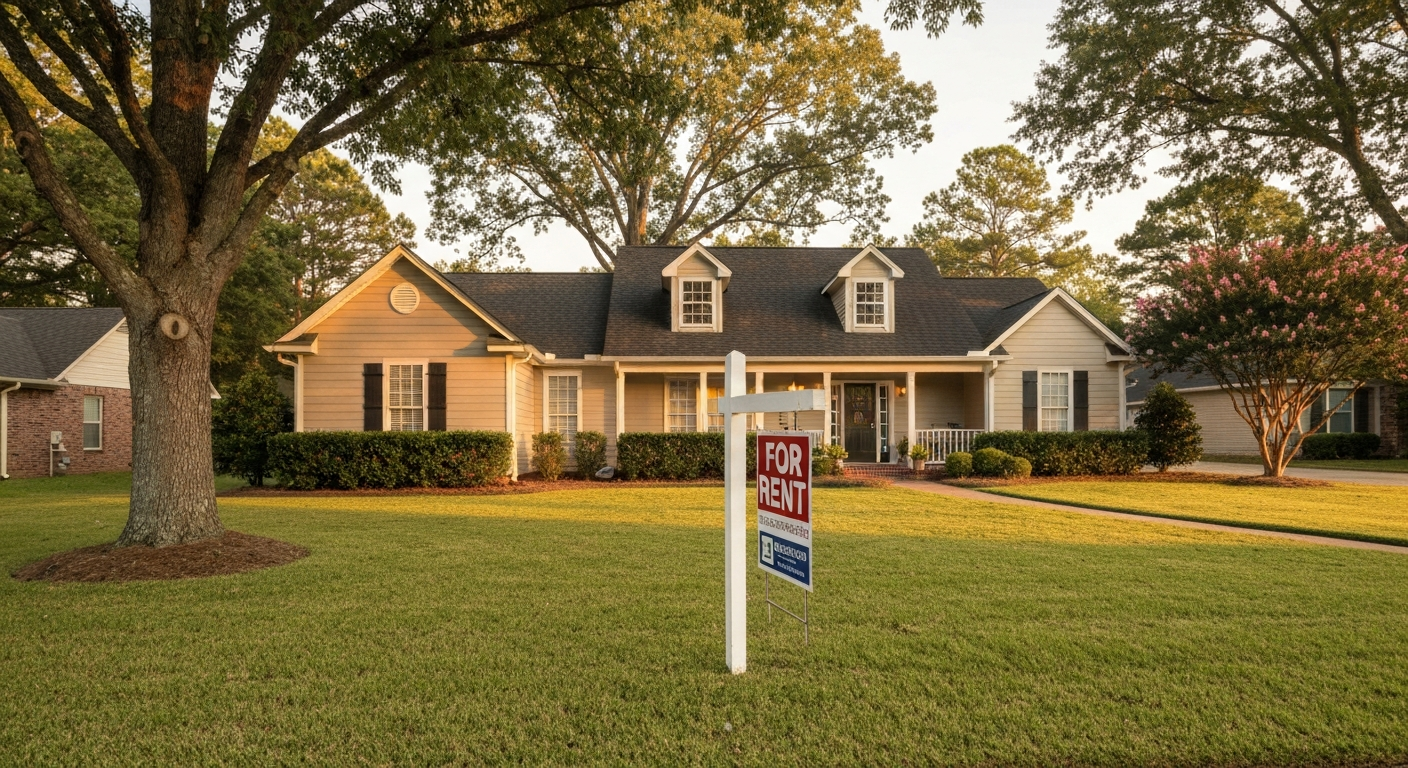
You didn't plan to become a landlord. Maybe you got PCS orders to leave Fort Gordon and couldn't sell in time. Maybe you inherited a family home in Martinez or Evans and aren't ready to let it go. Maybe the market just wasn't right when you needed to move, so you figured you'd rent it out "for now."
However you got here, you're not alone. Accidental landlords make up a significant share of the single-family rental market nationwide, and in the Augusta metro area — where military relocations, job transfers, and inheritance situations are common — it happens all the time.
The good news: renting out a home you already own can be a solid financial move. The average rent for a single-family home in the Augusta area sits around $1,189 to $1,250 per month as of early 2026, depending on the neighborhood and property size. That's often enough to cover a mortgage payment and then some.
The not-so-good news: there's a meaningful gap between "collecting rent" and "operating a rental property legally and profitably." This guide walks you through the critical steps to close that gap.
Update Your Insurance Before Anything Else
This is the step most accidental landlords skip — and it's the one that can cost you the most.
Your standard homeowner's insurance policy doesn't cover a property occupied by tenants. If a tenant or their guest gets injured on the property, or if there's damage while a renter is living there, your claim will likely be denied. You need a landlord insurance policy, sometimes called a dwelling fire policy or DP policy.
In Georgia, there's no state law that mandates landlord insurance. But your mortgage lender almost certainly requires dwelling coverage, and operating without proper liability protection is a serious financial risk. Most insurance professionals recommend carrying at least $300,000 in liability coverage, and many suggest $500,000 or more given today's legal environment. The premium difference between those tiers is often surprisingly small.
While you're at it, consider requiring your tenants to carry renter's insurance. Georgia law allows landlords to include this as a lease requirement, and it protects both parties. McBride Property Management includes renter's insurance requirements in all of our lease agreements for this reason.
Learn Georgia's Landlord-Tenant Laws
Georgia has specific legal requirements that apply the moment you rent out a property. Ignorance isn't a defense if something goes wrong, so here's what you need to know.
Security Deposits
Georgia caps security deposits at two months' rent. If you own more than ten rental units (including properties owned by your spouse or children), you're required to hold that deposit in a separate escrow account and provide written notice to the tenant about where it's held. Even if you own just one rental, keeping the deposit in a dedicated account is a best practice that protects you in disputes.
Habitability Standards
Under Georgia's habitability requirements, your rental must have safe plumbing, working heating and cooling systems, secure windows and doors, and be free of infestations or health hazards. Emergency repairs — think a burst pipe or a broken HVAC system in July — should be addressed within 24 to 48 hours. Non-critical repairs generally need to be handled within 30 days.
Required Disclosures
Before a tenant moves in, you're required to disclose information including the location of security deposit funds, any known lead-based paint hazards (for homes built before 1978), and flooding history. Federal Fair Housing laws also apply, prohibiting discrimination based on race, color, religion, sex, national origin, familial status, or disability.
Entry and Notice
You must provide reasonable notice before entering a tenant's unit — typically 24 to 48 hours — except in genuine emergencies. Your lease should spell out the specific notice period.
For the full rundown, the Georgia Landlord-Tenant Handbook from the Department of Community Affairs is worth bookmarking.
Price Your Rent Correctly
Setting the right rent is a balancing act. Too high and your property sits vacant, costing you money every month. Too low and you're leaving income on the table — or worse, attracting tenants who see a deal rather than a home.
Here's what the Augusta-area market looks like as of early 2026:
- Augusta metro median rent: approximately $1,189/month across all property types
- Columbia County (Evans, Grovetown, Martinez): typically $100 to $200 higher than the Augusta city average for comparable single-family homes, reflecting stronger school districts and newer housing stock
- North Augusta and Aiken County, SC: competitive with Columbia County pricing, with some areas offering slightly lower rates
Your specific rent should factor in the property's square footage, number of bedrooms and bathrooms, condition and age, neighborhood, and proximity to Fort Gordon or major employers. A comparative market analysis — looking at what similar rentals in your ZIP code are actually leasing for, not just listing for — gives you the clearest picture.
If you're not sure where to start, reach out to our team for a free rental analysis. We run these regularly for property owners across the CSRA.

Decide: Self-Manage or Hire a Property Manager
This is the fork in the road for every accidental landlord. Both options work — but they demand very different things from you.
Self-Managing
If you're local, handy, and comfortable with confrontation when necessary, self-managing can save you money. You'll keep the 8% to 10% of gross rent that a management company would charge.
But you'll also handle midnight maintenance calls, tenant screening (and the legal liability that comes with getting it wrong), lease enforcement, rent collection, and Georgia's eviction process if things go sideways. For a single property, the math can work. For someone who just got transferred out of state or inherited a property they've never lived in, it usually doesn't.
Hiring a Property Manager
A property manager handles the day-to-day so you don't have to — marketing, tenant placement, maintenance coordination, rent collection, lease enforcement, and legal compliance. The cost is typically a percentage of monthly rent, and the value shows up in fewer vacancies, faster maintenance turnaround, and not having to learn landlord-tenant law through expensive mistakes.
At McBride Property Management, we work with accidental landlords across Columbia County, Richmond County, and Aiken County every week. Many of our clients started with a single property they never planned to rent out — a PCS move from Fort Gordon, a family home in Evans or Grovetown they couldn't sell, or a property in North Augusta they inherited. We understand the learning curve because we've helped hundreds of owners navigate it.
Get Your Property Rent-Ready
Before you list, make sure the property meets habitability standards and presents well to prospective tenants. A rent-ready checklist should include:
Safety and compliance items: working smoke detectors and carbon monoxide detectors on every level, GFCI outlets in kitchens and bathrooms, secure locks on all exterior doors, and no deferred maintenance on HVAC, plumbing, or electrical systems.
Presentation items: fresh neutral paint, professional-grade cleaning (including carpets), functioning appliances, and a well-maintained exterior. First impressions matter — properties that show well tend to attract higher-quality applicants and lease faster.
Documentation: take dated photos of every room before the tenant moves in. This protects you during the security deposit return process and provides a clear baseline if there's ever a dispute about property condition.

Understand the Tax Implications
Rental income is taxable, but rental property ownership also comes with significant tax advantages that many accidental landlords don't realize they have.
You can generally deduct mortgage interest, property taxes, insurance premiums, maintenance and repair costs, property management fees, and depreciation of the structure itself. Depreciation alone — calculated over 27.5 years for residential property — can offset a substantial portion of your rental income on paper.
If you eventually sell the property, you may owe capital gains tax on the profit, but strategies like a 1031 exchange can defer that tax if you reinvest in another investment property. Consult a CPA or tax advisor who understands rental property — the deductions available to you are meaningful, and missing them costs real money.
Don't Let "Temporary" Become "Neglected"
The biggest risk for accidental landlords isn't a bad tenant or a legal issue — it's neglect. Because the property wasn't part of a deliberate investment strategy, it's easy to put it on autopilot. Maintenance gets deferred. Lease terms don't get updated. Rent stays flat for years while the market moves.
Whether you manage the property yourself or hire someone to do it, treat it like the financial asset it is. Review your rent annually. Stay current on local market conditions. Keep up with preventive maintenance. And revisit your long-term plan — are you holding, selling, or buying more?
The accidental landlords who do well aren't the ones who got lucky. They're the ones who took it seriously once it happened.
Becoming an accidental landlord doesn't have to mean becoming an overwhelmed one. If you own a property in the Augusta area and you're not sure what to do next, Noah McBride and the team at McBride Property Management can walk you through your options — no pressure, no obligation. Call 706.339.2874 or get in touch here.
Ready to Talk Property Management?
McBride Property Management handles the details while you enjoy the returns.
Talk to our team about your property