1031 Exchange Basics for Augusta Rental Property Investors
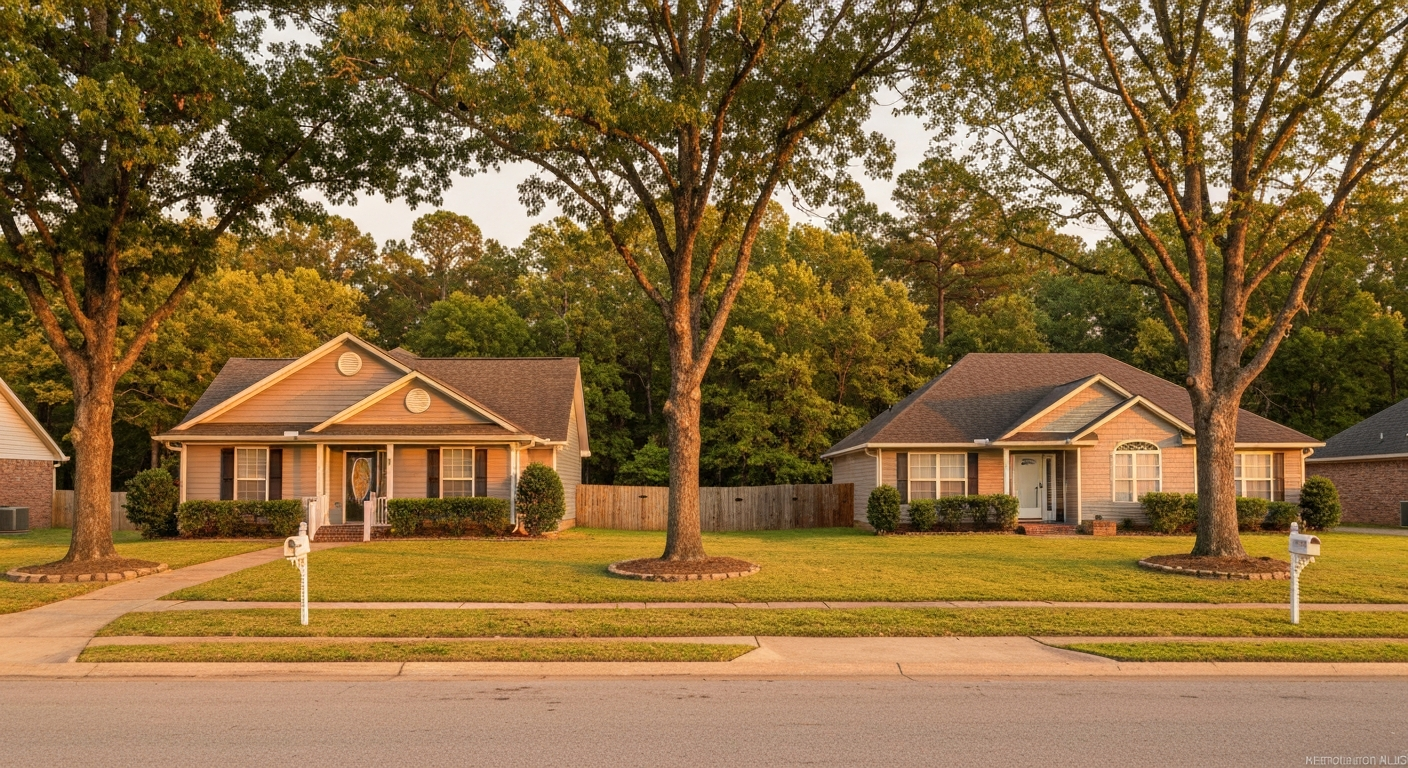
A 1031 exchange allows Augusta, GA rental property investors to sell an investment property and reinvest the proceeds into a like-kind property while deferring federal capital gains taxes. This IRS-recognized strategy is one of the most powerful wealth-building tools available to landlords in Columbia County and the greater CSRA.
What Is a 1031 Exchange and Why Should Augusta Investors Care?
If you own rental property in Augusta, Evans, Grovetown, or anywhere in Columbia County, you've likely built significant equity over the years. When it's time to sell, the capital gains tax bill can be a shock — federal rates of 15% to 20%, plus the 3.8% net investment income tax, can eat into your returns fast.
A 1031 exchange, named after Section 1031 of the Internal Revenue Code, lets you defer those taxes by rolling the sale proceeds into another qualifying investment property. You're not avoiding taxes permanently — you're deferring them, which keeps more of your capital working for you right now.
For investors in the Augusta market, where property values in Columbia County have appreciated steadily, a 1031 exchange can be the difference between upgrading to a higher-performing asset and losing tens of thousands to taxes on a single transaction.
How a 1031 Exchange Works: The Basic Steps
The mechanics of a 1031 exchange are straightforward in concept, though the execution requires careful timing and professional guidance.
Step 1: Sell Your Current Investment Property
You list and sell your existing rental property — say, a single-family rental in Martinez that you purchased years ago and has appreciated significantly. This is your "relinquished property."
Step 2: Engage a Qualified Intermediary
Before closing, you must designate a Qualified Intermediary (QI) to hold the sale proceeds. This is non-negotiable. If the funds touch your hands or your bank account at any point, the exchange is disqualified. The QI holds the money in escrow until it's used to purchase your replacement property.
Step 3: Identify Replacement Properties Within 45 Days
From the date your relinquished property closes, you have exactly 45 calendar days to formally identify potential replacement properties. The IRS allows you to identify up to three properties regardless of value (the "three-property rule"), or more under certain value-based exceptions.
Step 4: Close on the Replacement Property Within 180 Days
You must close on one or more of your identified replacement properties within 180 calendar days of selling the original property. These deadlines are firm — there are no extensions, even if the 45th or 180th day falls on a weekend or holiday.
What Qualifies as "Like-Kind" in Georgia?
This is where many investors get pleasantly surprised. "Like-kind" is broader than most people assume. You don't need to swap a single-family rental for another single-family rental. Any real property held for investment or business use qualifies, which means:
- A duplex in Augusta can be exchanged for a commercial building
- A rental home in Evans can be exchanged for a small apartment complex in Grovetown
- Vacant land held as an investment can be exchanged for an income-producing rental
The key requirement is that both the relinquished and replacement properties are held for investment or productive use in a trade or business. Your primary residence does not qualify, and neither does a property you intend to flip immediately.

Common Mistakes Augusta Investors Should Avoid
Noah McBride, broker at McBride Property Management, sees investors in the CSRA make a few recurring mistakes when attempting 1031 exchanges.
Missing the Deadlines
The 45-day identification window and 180-day closing window are the most common points of failure. In a competitive market like Columbia County, waiting too long to start your property search after selling can leave you scrambling. Begin identifying potential replacement properties before your relinquished property even closes.
Forgetting About the Boot
If the replacement property costs less than the one you sold, or if you pull cash out during the exchange, the difference is called "boot" — and it's taxable. To fully defer capital gains, the replacement property must be of equal or greater value, and all equity must be reinvested.
Not Coordinating With Your Property Manager
If you're selling a managed rental and buying another, your property management team needs to be in the loop. Amber McBride, property manager at McBride Property Management, works with investors during transitions to ensure tenant-occupied properties are handled properly during the exchange process — from lease assignments to security deposit transfers and move-out coordination.
How a 1031 Exchange Fits Into a Long-Term Augusta Investment Strategy
The real power of a 1031 exchange isn't in a single transaction — it's in the ability to chain exchanges over time. An investor who bought a $150,000 rental in Augusta ten years ago could exchange into a $300,000 property in Columbia County today, then exchange that into a multi-unit building five years from now, continually deferring taxes while scaling their portfolio.
This is how experienced landlords in the CSRA build generational wealth. Each exchange moves you up the ladder without the tax drag that normally slows portfolio growth.
McBride Property Management works with investors across Augusta, Evans, Grovetown, and North Augusta who use 1031 exchanges as part of their long-term strategy. Having a property management partner who understands the investment side — not just the day-to-day operations — makes the transition between properties significantly smoother.

What You'll Need on Your Team
A successful 1031 exchange requires coordination between several professionals:
- A Qualified Intermediary — the entity that holds your funds. Do not use your real estate agent, attorney, or accountant for this role, as related parties are disqualified by the IRS.
- A CPA or tax advisor — to confirm the exchange makes sense for your specific tax situation and to handle reporting on IRS Form 8824.
- A real estate broker — to help you identify and acquire replacement properties within the timeline. Noah McBride works with investors specifically on acquisition strategy in the Columbia County market.
- A property manager — if the replacement property will be a rental, having management lined up before closing means you start generating income immediately. Contact McBride Property Management through our services page to discuss management of your replacement property.
When a 1031 Exchange Might Not Be the Right Move
A 1031 exchange isn't always the best strategy. If you're planning to exit real estate investing entirely, deferring taxes just delays the inevitable — and the rules for eventually cashing out can be complex. If your property has depreciation recapture issues, the math may not work in your favor without careful planning.
Also, if you're under financial pressure and need liquidity, tying up proceeds in a replacement property on a strict timeline adds stress that may not be worth the tax benefit.
The right move is to run the numbers with your CPA before listing your property, not after.
Thinking about a 1031 exchange for your Augusta-area rental property? McBride Property Management helps investors navigate property transitions across Columbia County and the CSRA. Get in touch to talk through your options.
Best regards, Noah McBride Broker | The McBride Team 706.339.2874 Guiding you home.
Ready to Talk Property Management?
McBride Property Management handles the details while you enjoy the returns.
Talk to our team about your property