Renting Out Your Augusta, GA Home Before a Job Relocation
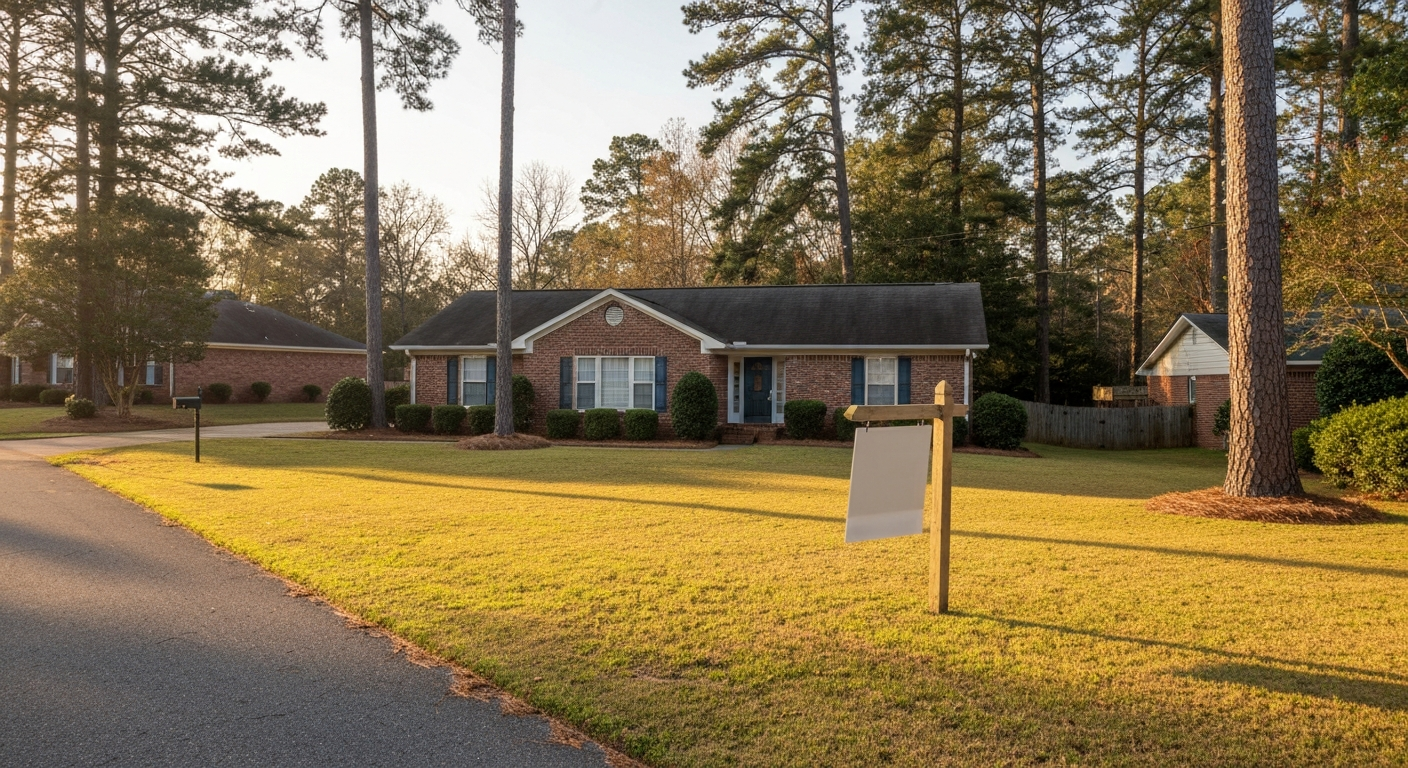
What do you need to do to rent out your Augusta, GA home before a job relocation? Convert your homeowners insurance to a landlord policy, designate a Georgia-licensed property manager (required by state law under O.C.G.A. § 44-7-25 for any non-resident owner), notify your HOA, and price the home using current CSRA market data—single-family homes in Columbia County are averaging $1,450–$1,650 per month in mid-2026. Plan for at least a 60-day runway before your move date.
You got a job offer. Maybe it's Atlanta. Maybe it's Charlotte, or Washington, D.C., or somewhere you'd never planned to land. The offer is good, the timeline is real, and your Augusta home—the one you've lived in for three, five, eight years—is now a decision with a deadline.
Selling sounds clean, but the Columbia County market isn't cooperating at your target price. A rushed sale at a 10% haircut is hard to stomach when you know what the neighborhood rents for. Renting sounds reasonable, but you've never been a landlord, you'll be 700 miles away, and you're not entirely sure what you're allowed to do—or how to do it legally.
This post walks you through the actual decisions, in the right order, with the Georgia-specific details that matter when you're the one holding the keys and moving across state lines.
Rent or Sell: Running the Real Numbers First
The question isn't abstract—it's arithmetic. Pull two numbers for your property.
The sell scenario: Take your estimated sale price and subtract 6–8% for agent commissions, closing costs, and concessions. If your home sits at $320,000 in fair market value and you net $295,000 after selling costs, you're holding that capital to deploy elsewhere. That's a clean outcome.
The rent scenario: Current single-family rental rates in Columbia County range from about $1,400 to $1,700 per month depending on size, location, and condition—with homes in Evans (30809) and Grovetown (30813) commanding the higher end, particularly those in the Fort Gordon commute shed where BAH-funded tenants are well-represented. If your mortgage PITI is $1,200 and you rent for $1,550, you're generating positive monthly cash flow before any repair reserve. You're also keeping the asset and retaining exposure to appreciation in one of the fastest-growing counties in the country, where population grew 77% between 2000 and 2025.
Two other variables matter: Section 121 and depreciation. Once you convert the home to a rental, the clock starts on your exit strategy. If you think you'll want to sell within the next three to five years, you may still qualify for the full Section 121 capital gains exclusion—but the math changes once you start taking depreciation, and there's a recapture wrinkle at sale that's worth understanding before you decide. More on that in the tax section below.
If you want a property-specific breakdown before committing to either path, McBride PM offers a free rental analysis with no obligation. It's the fastest way to model your actual income and expense picture against the selling alternative.
Georgia HB 399: The Law That Effectively Requires a Property Manager
If you're moving out of state, this is the single most important legal fact to know: Georgia law requires out-of-state rental property owners to designate a state-licensed property manager or broker as their local representative.
O.C.G.A. § 44-7-25, amended by HB 399 in 2025 and fully in effect as of 2026, applies even if you own just one single-family home. It doesn't matter if the home is in Evans, Grovetown, Martinez, or Augusta proper—if you live outside Georgia and you're collecting rent from a Georgia tenant, you need a licensed Georgia property manager on record.
The practical effect: you're not choosing between self-managing and hiring a property manager anymore. You're choosing between compliance and non-compliance. Self-managing from Charlotte isn't a legal option under HB 399. We covered the specifics of this law in detail in our Georgia HB 399 compliance guide for out-of-state landlords.
Hiring a property manager also gives you someone on the ground who can respond to maintenance calls, conduct inspections, enforce the lease, and handle any legal process—things that get very difficult when you're several states away. The cost is typically 8–10% of monthly rent, which on a $1,550/month home runs $124–$155/month. What it costs you not to have it can be far higher: an ignored maintenance issue, an undetected lease violation, or a dispossessory filing you didn't know about until it had snowballed.

The Insurance Switch You Cannot Skip
The moment your primary residence becomes a rental property, your standard homeowners policy no longer covers you. Homeowners policies are written for owner-occupied residences; they exclude tenant-caused damage, loss-of-rent coverage, and landlord liability.
You need to convert to a landlord insurance policy—also called a dwelling policy or rental property policy—before your first tenant moves in. Failing to do this is one of the most common and costly mistakes first-time accidental landlords make. A fire, a flood from a burst pipe, or a tenant injury on the property can result in a denied claim if you're still holding a homeowners policy at the time of the incident.
Georgia's SB 35, which took effect January 1, 2026, gives you one additional protection on the transition: insurance companies must now provide at least 60 days' written notice before canceling or non-renewing a policy, up from the previous 30 days. That's more runway to find replacement coverage if your carrier decides not to write landlord policies. But SB 35 doesn't change your underlying obligation—you need the right policy category in place from day one of tenancy.
For a standard single-family rental home in Georgia, the average landlord policy runs about $1,081 per year in 2026—roughly $90 per month—and that's a deductible business expense. You'll also want to require your tenant to carry renters insurance, which protects their belongings (yours aren't covered by a landlord policy anyway) and provides an additional liability buffer. The full breakdown of landlord insurance requirements for Georgia rental properties walks through coverage types, required minimums, and what to watch for in policy language.
Your 60-Day Pre-Departure Timeline
The most common planning mistake is starting too late. Sixty days sounds like margin until you're also negotiating an employment agreement, arranging a household move, and managing school transfers for your kids. Here's how to sequence the work:
Days 60–45 before departure
- Decision confirmed: rent, not sell. Engage a property manager immediately.
- Request a free rental analysis and market pricing estimate.
- Begin the insurance conversation with your current carrier—initiate the policy conversion.
- Pull your HOA CC&Rs and identify any rental notification requirements or caps.
- Walk the property with your property manager and build a pre-listing punch list.
Days 45–30 before departure
- Execute the property management agreement.
- Submit written notification to your HOA.
- Complete pre-listing maintenance (HVAC service, paint touch-ups, landscaping, any habitability items).
- Confirm your landlord policy effective date in writing—do not let the homeowners policy lapse before the landlord policy is active.
- Cancel or transfer utilities to property management billing.
Days 30–0 before departure
- Property listed and actively marketed with professional photos.
- Showings underway.
- USPS change-of-address filed; bank accounts updated.
- Dedicated checking account opened for rental income and expenses.
- Property manager has keys, access codes, HOA contacts, appliance documentation, and your preferred vendor list.
The goal is to have a signed lease—or a qualified applicant in process—before you physically leave Augusta. Vacancy is the enemy of cash flow, and a vacant property is far harder to manage remotely than an occupied one.
The McBride PM Pre-Rental Property Prep Checklist is a free download that audits your home against the specific condition and habitability standards a CSRA tenant will expect, including Safe at Home Act requirements.
Setting the Right Rent in the Mid-2026 CSRA Market
Pricing at launch is one of the highest-leverage decisions you'll make. Price too high and the home sits; a property that goes 60 days without a tenant costs you two months of income and often requires a price cut that signals something is wrong. Price too low and you've sold a dollar for 80 cents, and you're locked into that rate for the lease term.
Current single-family rental ranges for mid-2026:
| Bedroom Count | Columbia County (Evans/Grovetown) | Augusta / Richmond County |
|---|---|---|
| 2 BR | $1,200–$1,400 | $1,050–$1,250 |
| 3 BR | $1,450–$1,650 | $1,250–$1,450 |
| 4 BR | $1,650–$1,900 | $1,450–$1,650 |
These ranges reflect mid-2026 market data from RentCafe and Zumper. Homes in the Fort Gordon commute corridor—specifically Evans 30809 and Grovetown 30813—tend toward the top of each range because they attract a strong pool of military tenants whose Basic Allowance for Housing (BAH) is structured to cover market-rate rents.
Rental demand in the CSRA is backed by three structural anchors, not one. Fort Gordon trains approximately 20,000 signal and cyber soldiers annually and is in the middle of a multi-year, 35-project construction modernization program. Savannah River Nuclear Solutions (SRNS) is targeting more than 9,000 new hires over the next five years, per the U.S. Department of Energy, generating sustained demand in the Aiken-Augusta corridor. Augusta University Medical Center and Wellstar MCG produce a consistent pipeline of medical residents, fellows, and clinical staff who rent before buying. These aren't cyclical demand drivers—they're institutional.
The detailed methodology for pricing your CSRA rental property walks through comparables analysis, the BAH alignment calculation, and how condition affects achievable rent by neighborhood.

The Tax Picture When You Convert Your Primary Residence to a Rental
This is general guidance from a property manager—not legal or tax advice. Talk to a Georgia CPA before your first rental tax year.
Three items matter immediately when your home shifts from primary residence to rental property:
Depreciation begins on the placed-in-service date. Once the property is available and marketed for rent—even if it isn't occupied yet—you begin depreciating the building (not the land value) over 27.5 years on a straight-line schedule. On a home with an IRS-allocable building value of $220,000, that's about $8,000 per year in a depreciation deduction against your rental income. The deduction is valuable; plan for what happens when you sell.
Section 121 likely still applies—but read the fine print. The Section 121 exclusion lets you shield $250,000 (single) or $500,000 (married filing jointly) of gain from a home you lived in as your primary residence for at least 2 of the 5 years before the sale. If you rent now and sell in three years, you'll likely still qualify if you lived there before renting. The "trailing period" exception protects most sellers who convert and then sell—the non-qualified use restriction mainly catches sellers who rented first, moved in later, and then sold. IRS Publication 523 is the definitive resource on this.
Depreciation recapture isn't avoided by Section 121. Even if you fully exclude your capital gain, any depreciation you claimed (or were entitled to claim) during the rental period is recaptured at sale and taxed at a maximum rate of 25% as "unrecaptured Section 1250 gain." If you claim $8,000/year over four rental years, you'll owe tax on $32,000 at that rate when you sell—regardless of the 121 exclusion. Some owners consider skipping depreciation to avoid this, but the IRS recaptures the "allowed or allowable" amount whether you took it or not, so there's no benefit to declining the deduction. A CPA who handles rental real estate should be part of your setup from year one.
What Good Remote Ownership Actually Looks Like
Here's the honest version of what happens after you move: your property manager handles showings, lease signing, rent collection, and maintenance coordination. You log into an owner portal and you can see your monthly statement, inspection reports, and maintenance invoices from wherever you are.
When something breaks, your property manager calls the vendor and gets it fixed. If the HVAC fails during a Columbia County summer, a delayed response isn't just a habitability problem—it's a potential violation of Georgia's Safe at Home Act. When a tenant is late on rent, the notice process starts before you've even checked your email.
What you do: review your monthly owner statement, fund your reserve account (plan $3,000–$5,000 for routine repair reserves on a typical single-family home), and make decisions when they're presented to you—not hunt them down yourself.
Amber McBride, our operations manager, handles owner onboarding and sets up your owner portal directly. She coordinates vendor relationships, communicates transparently on any repair that exceeds the pre-authorized threshold in your management agreement, and keeps your property running to the standards your tenant expects and Georgia law requires.
The owner-manager relationship works best when expectations are set at the beginning—not three months later when your water heater fails at 11 PM on a Saturday. That conversation happens during onboarding. The owner FAQ page covers the most common questions about what property management includes, what you pay, and how the money flows to you each month.
The Three Questions to Answer Before You List
Before committing to renting, honestly evaluate three things:
Does the math work? Run the full expense picture: mortgage/PITI, property management fee (8–10%), vacancy allowance (5–8%), maintenance reserve (typically 1% of home value per year), insurance, and property taxes. The McBride PM Operating Expenses Worksheet has CSRA-specific benchmarks built in—it's the fastest way to see whether your projected rent actually covers your carrying costs.
Is the property in rental-ready condition? A home that needs $15,000 in deferred maintenance isn't ready to rent—it's ready to fail inspection and generate a legal dispute. Georgia's Safe at Home Act creates a clear habitability floor, and everything that falls below it is your obligation to fix before the first tenant moves in. Your property manager can walk the home and give you a realistic punch list with cost estimates.
Are you prepared to treat this as a business? This is the question first-time accidental landlords most consistently underestimate. Tenants who fall behind on rent, disclosures that don't match what's in the unit, the anxiety of watching your former home on someone else's lease—these are real. A professional property manager creates the operational distance that makes the business relationship manageable. The true cost of self-managing a CSRA rental property breaks down why the math rarely works in favor of DIY once you're living out of state.
If you can answer yes to all three, you're ready to move forward.
Ready to run the numbers on your Augusta-area home? McBride Property Management offers a free, no-obligation rental analysis for Columbia County and Richmond County properties. We'll tell you what your home should rent for, what your net income looks like after expenses, and whether renting makes sense for your specific situation before you commit. Call (706) 339-2874 or submit your property details online and we'll have an analysis back to you within 24 hours.
If you're on a tight timeline, download the McBride PM Pre-Rental Property Prep Checklist now—it's the fastest way to confirm what needs to happen before your first showing.
Noah McBride, Broker McBride Property Management 706.339.2874 Guiding you home.
Ready to Talk Property Management?
McBride Property Management handles the details while you enjoy the returns.
Talk to our team about your property