How Maintenance Requests Affect Tenant Retention

How do maintenance requests affect tenant retention in Augusta, GA? Maintenance response time is one of the strongest predictors of whether a tenant renews their lease. Landlords in Augusta and Columbia County who resolve repair requests within 24–48 hours retain significantly more tenants than those who delay, reducing costly vacancy and turnover expenses.
You bought a rental property to build wealth — not to field phone calls about leaky faucets at 10 p.m. But here's the reality most Augusta-area landlords underestimate: how you handle those maintenance calls has a direct, measurable impact on whether your tenants stay or leave.
Tenant turnover is one of the most expensive problems in rental property ownership. Between vacancy loss, cleaning, repairs, marketing, and leasing costs, replacing a single tenant in Columbia County can easily cost $2,000–$4,000 or more. And according to the National Apartment Association, the average cost of turning a unit nationally exceeds $3,500 when you factor in lost rent during vacancy.
The good news? One of the most effective tenant retention strategies isn't a rent discount or a fancy upgrade. It's simply responding to maintenance requests quickly, professionally, and completely.
Why Maintenance Response Time Matters More Than You Think
Tenants don't expect perfection. They expect responsiveness. A 2024 SatisFacts survey found that maintenance satisfaction is the number-one factor tenants cite when deciding to renew — ahead of rent price, location, and even unit quality.
Think about that for a moment. A tenant in Evans, GA will tolerate a modest rent increase if their last three work orders were handled within a day. But a tenant who waited two weeks for a broken garbage disposal? They're already browsing Zillow.
At McBride Property Management, we see this pattern play out across our portfolio in Augusta, Columbia County, and the broader CSRA. The properties with the strongest renewal rates are rarely the newest or most upgraded — they're the ones where tenants feel heard and taken care of.
The Real Cost of Ignoring a Work Order
Delayed maintenance doesn't just frustrate tenants. It compounds into real financial damage for property owners.
Vacancy loss. If a tenant leaves because of unresolved repairs, you're looking at one to three months of lost rent while you re-lease the unit. In the Augusta market, where average rents for a three-bedroom home range from $1,400 to $1,800 per month, that's $1,400–$5,400 in lost income — easily preventable.
Escalating repair costs. A small roof leak ignored for six months becomes water damage, mold remediation, and drywall replacement. What could have been a $200 fix turns into a $3,000 project. Amber McBride, who oversees our property management operations, often reminds owners: "The cheapest repair is the one you do today."
Legal exposure. Georgia landlord-tenant law requires that landlords maintain habitable conditions. Under O.C.G.A. § 44-7-14, tenants can pursue remedies if a landlord fails to make necessary repairs after reasonable notice. Proactive maintenance isn't just good business — it's a legal obligation.
What "Fast" Actually Looks Like in Property Management
Not all maintenance requests carry the same urgency, and your tenants understand that. What matters is setting clear expectations and meeting them consistently.
Emergency Requests (Response Within Hours)
These are situations involving active water leaks, HVAC failure during extreme heat or cold, gas leaks, electrical hazards, or security issues like a broken door lock. In Augusta, where summer temperatures regularly hit the upper 90s, a non-functioning air conditioner qualifies as an emergency. McBride Property Management maintains a 24/7 emergency line and dispatches vendors the same day for these issues.
Routine Requests (Response Within 24–48 Hours)
Dripping faucets, running toilets, appliance issues, minor cosmetic problems. These should be acknowledged within a few hours and scheduled for repair within one to two business days. The key word is acknowledged — even if the plumber can't come until Thursday, a tenant who gets a text within two hours saying "We've scheduled your repair for Thursday morning" feels taken care of.
Preventive Maintenance (Scheduled Quarterly or Seasonally)
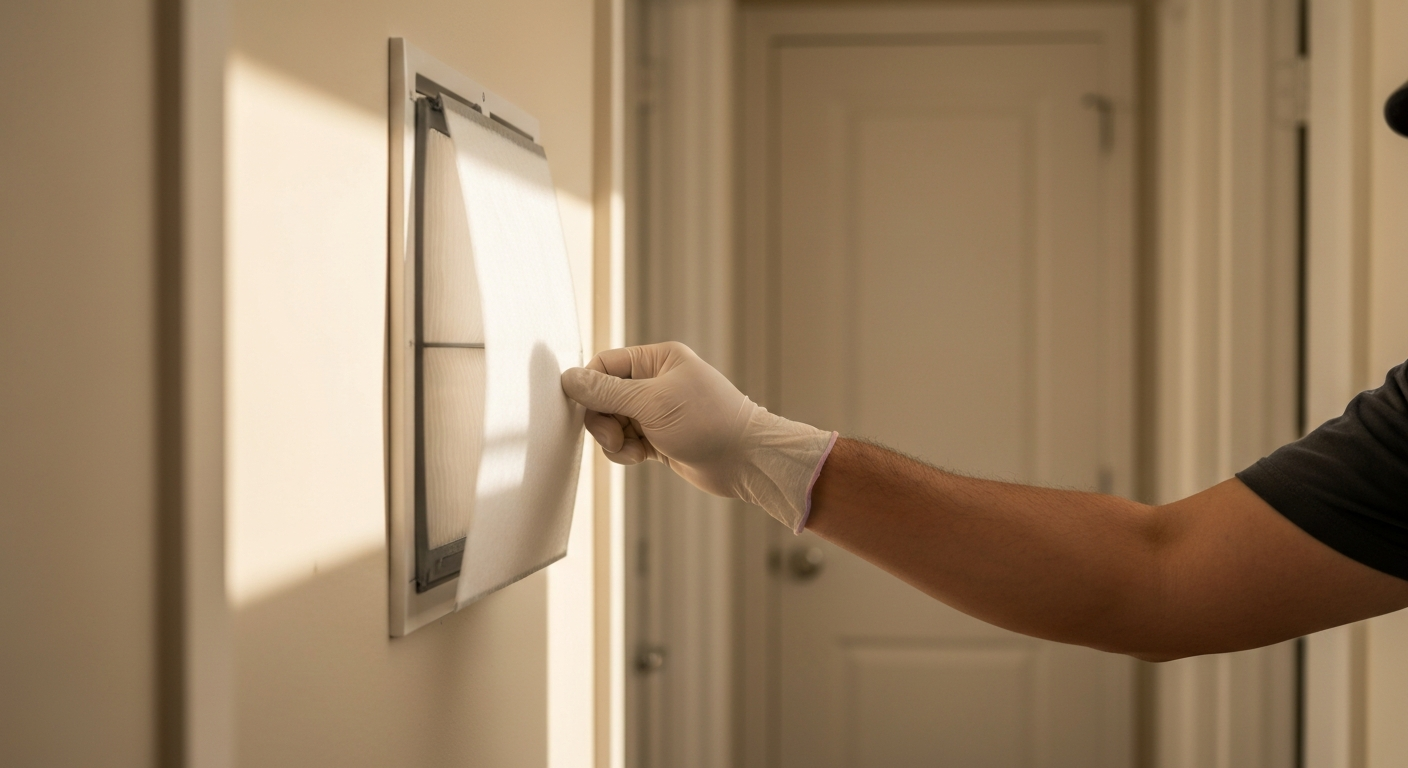
HVAC filter changes, gutter cleaning, pest treatment, smoke detector battery checks. This is the category most self-managing landlords skip entirely, and it's the one that prevents the most expensive surprises. A seasonal maintenance checklist keeps small issues from becoming tenant complaints.

How Professional Management Changes the Equation
Self-managing landlords in the Augusta area often tell us the same thing: they started out handling everything themselves to save money, but the maintenance burden eventually wore them down. Missed calls, vendor no-shows, and after-hours emergencies add up — and the tenant experience suffers.
Here's what a professional property manager brings to the maintenance equation that most individual landlords can't replicate on their own.
Vendor relationships and pricing. McBride Property Management works with a vetted network of licensed contractors, plumbers, electricians, and HVAC technicians across Columbia County and the CSRA. Because we manage volume, we get priority scheduling and competitive rates that individual owners typically can't access.
Systems and tracking. Every maintenance request in our system is logged, time-stamped, and tracked to completion. Owners see exactly what was reported, when it was addressed, and what it cost — through their online portal. No guessing, no surprises on the monthly statement.
Consistent communication. Our tenants receive updates at every stage of a work order: received, scheduled, completed. Noah McBride, broker at McBride Property Management, puts it this way: "The number one complaint tenants have isn't that something broke. It's that nobody told them when it would be fixed."
Tenant Retention by the Numbers
The math on tenant retention is straightforward, and it overwhelmingly favors investing in responsive maintenance.
Consider a rental property in Evans, GA renting for $1,600 per month. If your tenant renews, you collect $19,200 over the next year with zero vacancy and no turnover costs. If they leave, you're facing roughly one month of vacancy ($1,600), $500–$1,000 in make-ready costs, and $300–$500 in marketing and leasing expenses. That's $2,400–$3,100 in direct costs — plus the risk that your next tenant doesn't stay as long.
Now compare that to the cost of maintaining a responsive maintenance program: a few hundred dollars per quarter in preventive upkeep and a property management team that handles the rest. The ROI isn't even close.
Five Maintenance Practices That Keep Tenants Renewing
If you're managing a rental property in Augusta, Grovetown, Martinez, or anywhere in Columbia County, these practices will directly improve your retention rates.
Acknowledge every request within two hours. Even a short text or email confirmation goes a long way. Silence is what drives tenants to frustration.
Complete routine repairs within 48 hours. If a longer timeline is unavoidable, explain why and provide an updated schedule. Transparency builds trust.
Conduct seasonal inspections. Catching a slow leak during a quarterly walkthrough prevents a midnight emergency call — and an angry tenant.
Document everything. Keep records of every request, repair, and communication. This protects you legally and helps identify recurring issues with a property.
Ask for feedback after repairs. A simple follow-up message — "Was the repair completed to your satisfaction?" — signals that you value the tenant's experience. That signal matters more than most landlords realize.
When It's Time to Stop Self-Managing
If maintenance requests are piling up, tenants are leaving at lease renewal, or you're spending more time managing your rental than enjoying the income from it, that's a sign. Professional property management isn't an expense — it's an investment in the long-term performance of your asset.
McBride Property Management serves landlords and property owners across Augusta, Columbia County, Evans, Grovetown, Martinez, and the surrounding CSRA. We handle maintenance, tenant communication, leasing, and everything in between — so your rental works for you instead of the other way around.
Ready to talk about what professional management looks like for your property? Contact us or call Noah McBride directly at 706.339.2874.
Ready to Talk Property Management?
McBride Property Management handles the details while you enjoy the returns.
Talk to our team about your property